3 Days in Paris: The Ideal First-Timer Itinerary
Three walks, two museums, one hill — and the day the 48-hour visitors have to give up.
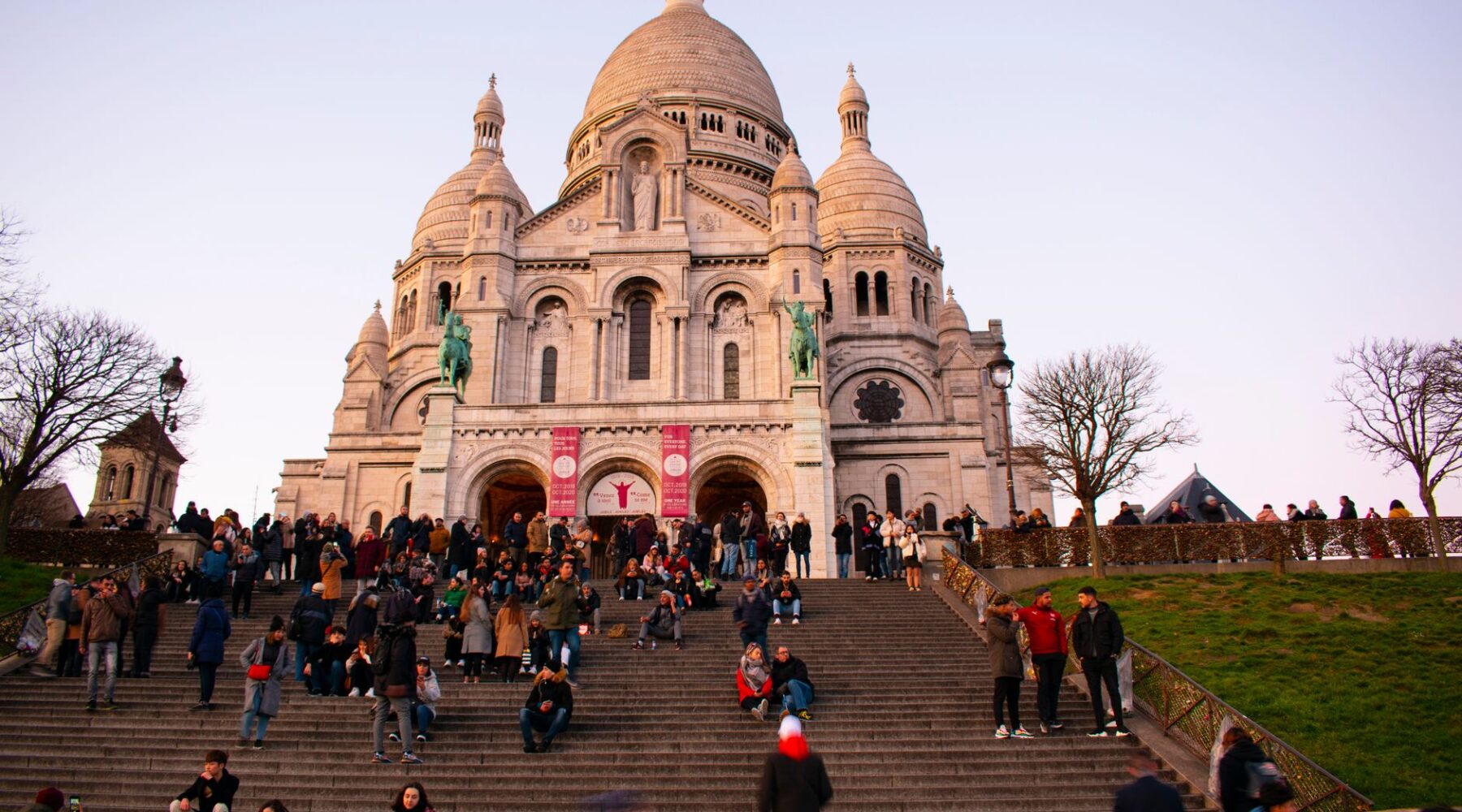
Three days is the length at which a Paris trip stops feeling like a raid and starts feeling like a visit. You get every headline sight, one museum done properly rather than skimmed, a full evening in the best neighbourhood in the city, and a whole morning on a hill that most two-day visitors have to give up. The 3 days in paris itinerary below is the one we would give a first-timer without hesitation: three self-contained days, each a single walk, with the transport kept to the beginning and end.
What it does not include is Versailles, and that is deliberate. Three days is one day short of being able to afford it. Everything else — the Louvre, the Orsay, Notre-Dame, Sainte-Chapelle, the Eiffel Tower, Montmartre, the Marais, the Latin Quarter — fits, and fits comfortably. Prices were checked in September 2026; treat them as the right order of magnitude, since French state-museum tariffs changed sharply in January 2026 and will change again.
The three days at a glance
| Morning | Afternoon | Evening | Walking | |
|---|---|---|---|---|
| Day 1 The island and the Left Bank |
Notre-Dame, Sainte-Chapelle, Île de la Cité | Latin Quarter, Panthéon, Luxembourg | Saint-Germain, dinner | ≈9 km |
| Day 2 The Right Bank axis |
Louvre, 9am slot | Tuileries, Concorde, Champs-Élysées, Arc de Triomphe | The Marais | ≈11 km |
| Day 3 The hill and the tower |
Montmartre and Sacré-Cœur | Musée d’Orsay or the Orangerie | Eiffel Tower at dusk, Seine cruise | ≈12 km |
The order matters. Day 1 is deliberately the lightest, because the first day of a trip is always the one where you are jet-lagged, disoriented and slower than you expect. Day 3 is the heaviest and ends with you sitting down on a boat.
What three days costs
| Item | Price | Notes |
|---|---|---|
| Louvre | €22 EEA / €32 non-EEA | Timed slot required; closed Tuesdays |
| Musée d’Orsay | ≈€16 | Closed Mondays |
| Sainte-Chapelle | ≈€13 | Open daily; book a slot |
| Panthéon | Paid entry | Free for EU under-26s |
| Eiffel Tower, stairs to level 2 | €14.80 | Shortest queue, same view |
| Eiffel Tower, lift to level 2 | €23.50 | The better viewing level |
| Eiffel Tower, lift to summit | €36.70 | Books out 6–8 weeks ahead in summer |
| Seine sightseeing cruise | ≈€16–20 | About an hour |
| Single Metro ticket | €2.55 | Bulk carnet discount abolished January 2026 |
| Navigo Jour day pass | €12.30 | Worth it only on Day 3 |
| Two-course lunch formule | €19–28 | Half the price of the same food at dinner |
| Dinner, mid-range | €30–50 | Book at least one |
Reckon on €230 to €330 per person for three days excluding accommodation, or around €130 if you picnic at lunch, take the stairs at the tower and swap one paid museum for the free churches and parks. Our cost breakdown and the budget guide both go deeper.
Plan around the closing days first
Before anything else, work out which three days of the week you have. This single detail reorders the whole trip and most generic itineraries ignore it entirely.
- Closed Mondays: Musée d’Orsay, Musée Rodin, Musée Picasso, the Catacombs, Château de Versailles, Musée de Cluny.
- Closed Tuesdays: the Louvre, the Musée de l’Orangerie, the Centre Pompidou (check its current renovation status separately before planning around it).
- Open every day: Notre-Dame, Sainte-Chapelle, the Conciergerie, Sacré-Cœur, the Arc de Triomphe, the Eiffel Tower, the parks and the neighbourhoods.
So if your three days include a Monday, put the Louvre on it. If they include a Tuesday, put the Orsay on it. If they include both, the Louvre goes on Monday and the Orsay on Tuesday, and the Montmartre day fills whichever of the three is left. Our museums guide has the full closure table.
Day 1 — the island, the Latin Quarter and Saint-Germain
The gentlest of the three days, and the one that orients you. Almost all of it is free.
Morning: Île de la Cité
Start at Notre-Dame before nine. The cathedral reopened in December 2024 after the fire and the restoration, entry is free, and the difference between the queue at half past eight and the queue at eleven is the difference between five minutes and an hour. The towers are a separate ticket with a separate queue; on a three-day trip they are not worth it, because you have two better viewpoints already booked.
Walk the island west afterwards. The Conciergerie — the medieval royal palace that became the revolutionary prison where Marie-Antoinette was held — has an extraordinary vaulted hall and is usually near-empty. Beyond it, Place Dauphine is a quiet triangle of plane trees that most visitors never find, and the Square du Vert-Galant at the very tip is a small park at water level under the Pont Neuf.
Then back east for Sainte-Chapelle: a dim painted lower chapel, a narrow stair, and then a room whose walls are essentially fifteen metres of stained glass on all four sides. Fifteen minutes is a complete visit and it is the single most concentrated piece of beauty in the city.
Afternoon: the Latin Quarter
Cross to the Left Bank and go inland into the Latin Quarter, which has been a student district since the twelfth century and still behaves like one behind the main boulevards. Lunch is a two-course formule on a side street — €19 to €28, and the same kitchen will charge half again for the same food in the evening. Do not eat on Boulevard Saint-Michel or in the narrow lanes around Rue de la Huchette, where the €14 three-course menus are exactly as good as they sound.
Then the Panthéon, with Foucault’s pendulum swinging in the nave and the crypt below holding Voltaire, Rousseau, Curie and Hugo; Rue Mouffetard, which is a market street pretending to be a village; and the Jardin du Luxembourg, which is the best park in central Paris and where the green chairs are free and unlimited.
Evening: Saint-Germain
Walk north-west into Saint-Germain-des-Prés for the first evening. It is expensive on the boulevard and reasonable one street back, and the streets around Rue de Buci and Rue de Seine have the density of small restaurants you want on a first night when nothing is booked. Keep the evening short — Day 2 starts at nine with a museum.
Day 2 — the Louvre and the great axis
09.00 — The Louvre, with a plan
Book the earliest slot available. The Louvre is the largest art museum on earth and three hours is the sensible maximum on a three-day trip, which means choosing a wing rather than wandering.
- Denon — Italian Renaissance painting, the Mona Lisa, the Winged Victory of Samothrace. Much the busiest.
- Sully — the Egyptian collection, the Venus de Milo, and the excavated foundations of the medieval fortress in the basement, which almost nobody visits and which are the best twenty minutes in the building.
- Richelieu — Northern European painting, the two glass-roofed sculpture courtyards, and the absurd Napoleon III apartments. The quietest wing by a distance.
Two wings, not three. And the honest note on the Mona Lisa: it is small, behind glass, at the end of a slow queue, in a room where the surrounding paintings are better and empty. Go if you want to; do not organise the morning around it.
Midday: the Tuileries
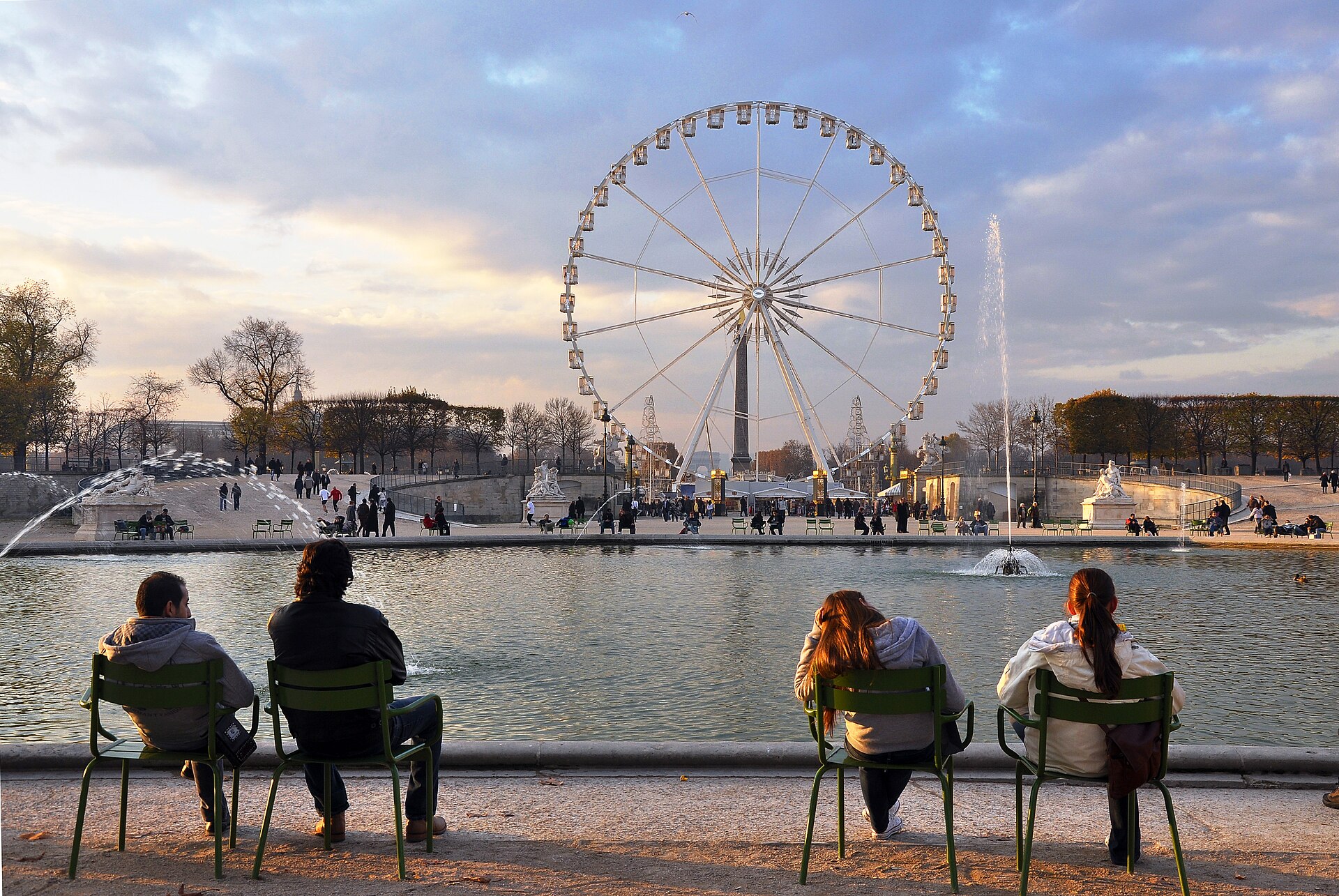
Come out of the pyramid into the Jardin des Tuileries and take one of the green chairs by the octagonal basin. This is a free, unlimited and genuinely restorative twenty minutes and a startling number of visitors walk straight past it on their way to the next thing. Lunch is either a bakery picnic in the chairs or a proper sit-down meal in the streets north of Rue de Rivoli.
Afternoon: Concorde to the Arc
Walk west through the Place de la Concorde — largest square in the city, Egyptian obelisk in the middle, the guillotine once at the north end — and up the Champs-Élysées. Be clear-eyed about it: the avenue is chain stores and car showrooms below some very good architecture, and the upper half is duller than the lower. Walk it once for the scale. Do not eat on it.
The Arc de Triomphe at the top is the better of the city’s two great viewpoints, because from it you can see the Eiffel Tower — which you cannot do from the Eiffel Tower. Twelve avenues radiate from the roundabout in a pattern that only makes sense from above. Use the underpass to reach it.
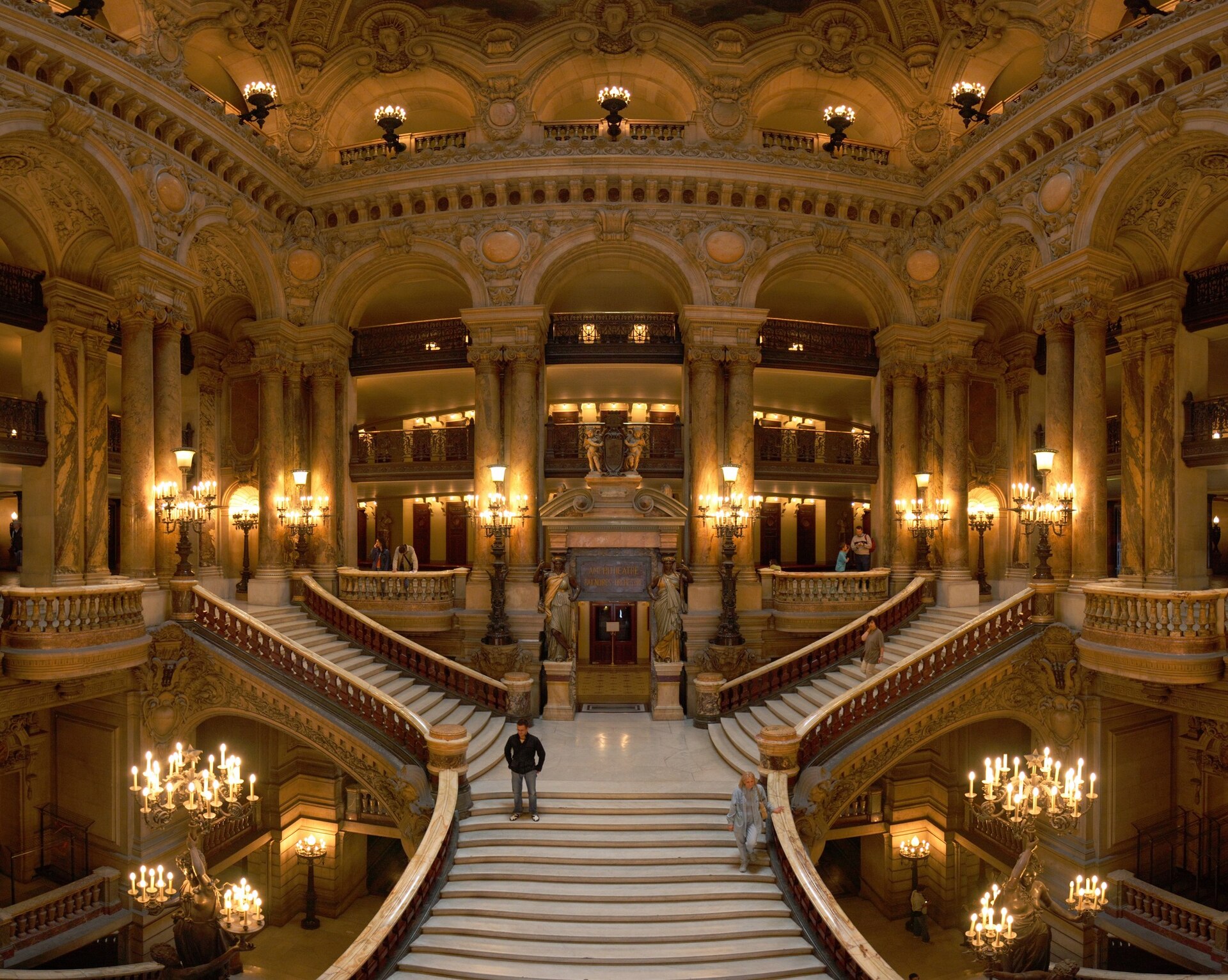
If the avenue does not appeal — and for a good number of people it will not — there is a better use of the same two hours ten minutes north. The Palais Garnier, the nineteenth-century opera house that gave the world the Phantom, can be toured independently on a self-guided ticket, and its grand staircase is the most theatrically excessive interior in Paris: marble in four colours, a ceiling by Chagall in the auditorium above, and a foyer designed for being seen in rather than for listening to anything. Our Paris opera guide covers the tours and the performances, and the Opéra district guide takes in the department stores and the covered passages around it.
Evening: the Marais
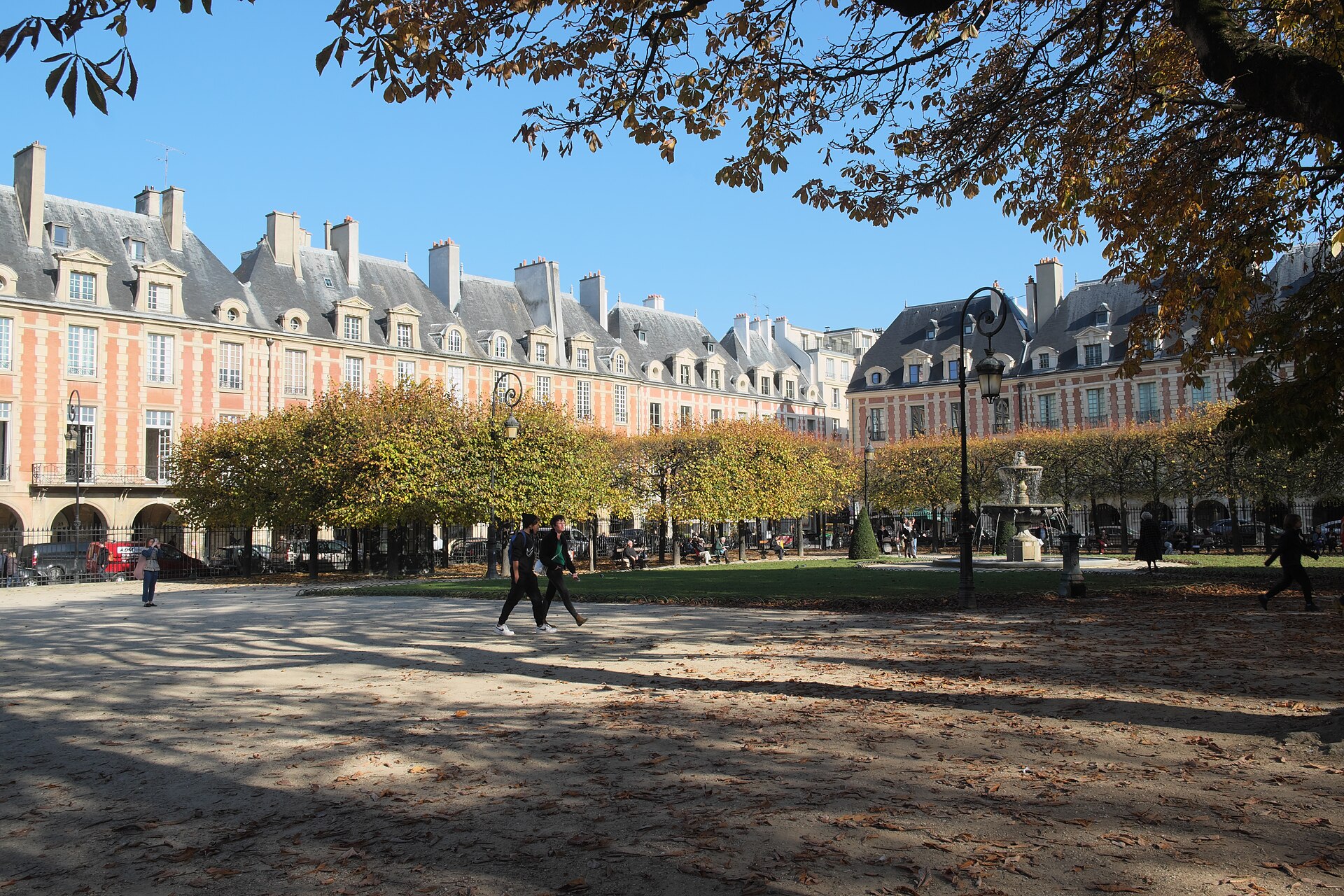
Line 1 east to Saint-Paul. The Marais is the best evening neighbourhood in central Paris and, unusually, a lot of it opens on Sundays and Mondays. Walk the Place des Vosges first — arcaded on all four sides, built in 1612, and you are allowed on the grass. Then the streets north of it: Rue des Rosiers for falafel, Rue Vieille-du-Temple and Rue de Bretagne for dinner, the Marché des Enfants Rouges if you would rather graze than sit.
Day 3 — Montmartre, one more museum, and the tower
The day the two-day visitors have to give up, and the reason three days is so much better than two.
Morning: Montmartre
Metro to Abbesses, which has one of the deepest station lifts in the network and a spiral stairwell painted from top to bottom. Then walk up rather than taking the funicular — the streets are the point.
Sacré-Cœur is free to enter, and the terrace in front of it is free too and gives you most of the view. The dome climb costs extra and adds height rather than information; it is a fine thing to do if you like stairs and a skippable one if you do not.
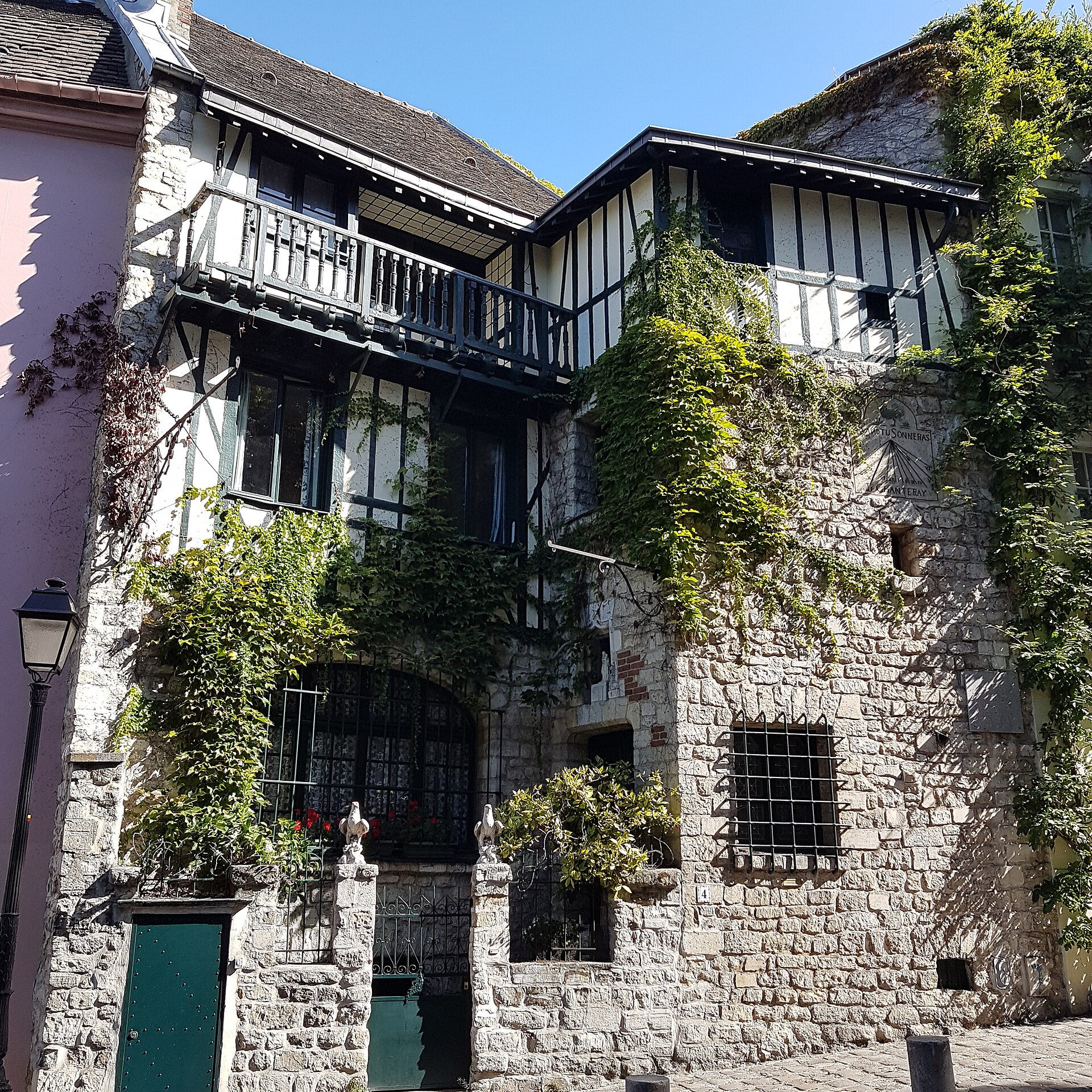
What actually makes the morning is the streets north and west of the basilica: Rue de l’Abreuvoir with its ivy-covered houses, the vineyard at Clos Montmartre, the two windmills on Rue Lepic, the Bateau-Lavoir where Picasso painted Les Demoiselles d’Avignon. Walk straight through Place du Tertre and its portrait painters — the Montmartre people come for is two streets away from it in every direction.
Afternoon: the second museum
Come down the hill and take Line 12 or a bus south. Then pick one:
- Musée d’Orsay — the default. A converted Beaux-Arts railway station holding the best Impressionist collection anywhere. Go up to the fifth floor first, work down through the sculpture, ninety minutes. Closed Mondays.
- Musée de l’Orangerie — the short option. Two oval rooms of Monet water lilies in the Tuileries, forty minutes, and arguably a more complete experience than three hours in a bigger museum. Closed Tuesdays.
- Musée Rodin — the outdoor option. A hôtel particulier with a sculpture garden that is worth the ticket by itself, and it is on the walking route to the Eiffel Tower. Closed Mondays.
Late afternoon: the Eiffel Tower
Book a slot roughly an hour before sunset. That single ticket gives you the city in daylight, the light going gold and the lamps coming on, which is far better value than a midday visit.
Three levels, and the middle one is right for most people. The Eiffel Tower stairs to the second floor cost €14.80 and have a queue a fraction of the lift’s, for the same view. The lift to the second floor is €23.50. The summit lift is €36.70 and gives you a second queue at altitude for a view in which the city has become too small to identify — genuinely not worth it on a first visit, and it sells out six to eight weeks ahead in summer anyway.
Evening: the river
Dinner around Rue Cler in the 7th, then a late Seine cruise. This is the one boat trip in Paris that earns its ticket — the city was built to be seen from the water, the bridges are the argument, and after dark it is all lit. An hour, roughly €16 to €20, and a good way to end a trip because you are finally sitting down.
Skip the dinner cruises. A mediocre set menu at a high price, eaten under fogged glass. A sightseeing cruise plus a real dinner costs less and does both jobs properly.
Three variations
If you must see Versailles
You can, but something has to go, and the honest answer is that it should be Day 3 in its entirety — Montmartre, the second museum and the tower all sacrificed for one palace. Versailles is a full day: 35 to 60 minutes each way on the RER C, a timed château entry, the gardens and the Trianon palaces, which are the better half and which almost everyone skips. It closes on Mondays. If Versailles is genuinely the reason you came to France, take the trade; if it is on the list because it is on everyone’s list, leave it for a four-day trip. The transport guide has the routes.
If you are travelling with children
Halve every museum and double every park. The Louvre becomes ninety minutes with a scavenger hunt; the Orsay becomes the Orangerie; Montmartre becomes the carousel and the funicular rather than the walk up. Add the Jardin des Plantes, the Luxembourg puppet theatre and a Batobus ride, which beats the Metro because everyone stays seated and can see out. See Paris with kids and the family itinerary, and if there is a buggy involved, the stroller guide is essential reading before you meet your first flight of Metro stairs.
If it is your second visit
Keep Day 3 and rebuild the first two. Swap the Louvre for the smaller museums — Marmottan for Monet, Jacquemart-André for the house as much as the art, Cluny for the medieval collection in a Roman bath house. Swap the Latin Quarter for Belleville and Canal Saint-Martin. Add Père Lachaise, which is a hillside village of the dead and takes two unhurried hours. The unusual things to do guide is built for exactly this trip.
Where to stay for three days
Central. On a three-day trip, twenty minutes each way from a cheaper hotel costs you two hours over the trip, which is most of a museum and all of an evening.
- Best all-round: the Marais (3rd and 4th) or Saint-Germain (6th). Walkable to almost everything on this itinerary, and full of places to eat late.
- Best for first-timers: the 5th, around the Panthéon. Slightly cheaper than the 6th, ten minutes from the island, and quieter at night.
- Best value: the 9th around South Pigalle or the 11th around Oberkampf — twenty minutes out, noticeably cheaper, and neighbourhoods in their own right.
- Avoid on a short trip: anywhere beyond the Périphérique, and the immediate streets around Gare du Nord, which are convenient and not pleasant.
Our where to stay guide and the arrondissement comparison break it down properly, and if space matters more than location, the apartment versus hotel piece is worth reading — central Paris hotel rooms are genuinely small.
Eating across three days
Nine meals is enough to eat genuinely well in Paris rather than merely eating in it, and three days is the point where it is worth thinking about food as part of the plan rather than as an interruption to it.
Make lunch the main meal
The most useful piece of food advice in the city. Neighbourhood bistros run a two-course lunch formule at €19 to €28 with the same chef and the same suppliers they charge €40 to €50 for at dinner. You also get a table without booking. Three big lunches and three light dinners is a better three days of eating than the reverse and roughly €60 a head cheaper.
Learn the three warning signs
Photographs of the food outside. A menu in six languages. Someone on the pavement inviting you in. Any one is a yellow flag; all three together is close to a guarantee. They cluster exactly where a first-time visitor ends up — around Notre-Dame, on Rue de la Huchette, along the Champs-Élysées, directly under the Eiffel Tower and at the foot of Sacré-Cœur. Two streets inland almost always fixes it. Our restaurant guide covers what to look for instead, and the guide to what to order is a useful thing to read on the plane.
Use the bakeries and the markets
A boulangerie lunch — filled baguette, pastry, water — costs €8 to €12 and turns a meal into a picnic in the Tuileries or the Luxembourg, which buys back an hour and puts you outdoors. Buy the pastry at a bakery and the coffee at a café; very few places do both well. Standing at the bar for coffee costs about half what sitting on the terrace does, and that is published pricing rather than a scam. See the bakery guide, the food markets guide and, for the neighbourhood version, the café guide.
One booked dinner, one wine bar
Book one dinner for the last evening, a week or two ahead. Then, on one of the other nights, skip the restaurant entirely and go to a wine bar instead — a plate of charcuterie, a board of cheese and two or three glasses of something you would not have chosen yourself. It is cheaper than dinner, it is more Parisian than dinner, and it leaves you able to walk afterwards.
What to skip on a three-day trip
- Versailles, unless you sacrifice a whole day for it. Half-measures do not exist here.
- The Eiffel Tower summit. The second floor is the better view and the shorter queue.
- The Paris Museum Pass. At €90 for two days or €109 for four, it needs two or three included sights every day to pay back, and this itinerary has one a day. Our pass analysis runs the numbers.
- The hop-on hop-off bus. Slower than walking on the central loop, slower than the Metro elsewhere. A free walking tour on the first morning is a better use of the same time.
- Lunch on the Champs-Élysées or under the Eiffel Tower. Two of the three worst-value dining zones in the city.
- A day trip. Giverny, Fontainebleau and Reims are all excellent and all wrong for 72 hours. See the day trips guide for when they fit.
Frequently asked questions
Is 3 days in Paris enough?
Enough for an excellent first visit, yes. Three days covers every headline sight, two proper museums, three good neighbourhoods and an evening at the tower, with time left over to sit down. What it will not cover is Versailles, a day trip, or the second-tier museums. Four days is where the trip stops feeling tight; five is where it stops feeling like an itinerary at all.
What is the best order for 3 days in Paris?
Lightest day first, heaviest day last, and museums arranged around their closing days. In practice: island and Latin Quarter on Day 1, Louvre and the great axis on Day 2, Montmartre plus a second museum plus the tower on Day 3. If a Monday or Tuesday is involved, reorder so the closed museum lands on a day you were not visiting it.
Can you see Versailles in 3 days in Paris?
Only by giving up an entire day of the three. Versailles is five to seven hours door to door once you include the RER, the timed entry, the gardens and the Trianon estate. On a 72-hour trip that is a third of your holiday for one palace, however magnificent. We would not, and we say so as people who like Versailles.
How much walking is in a three-day Paris itinerary?
Roughly 9 to 12 kilometres a day as written — around 15,000 to 20,000 steps. Paris pavements are cobbled and uneven, the Metro is mostly stairs, and Montmartre is a hill. Bring shoes you have already broken in; our packing list is unambiguous about this.
Do I need a Navigo pass for three days?
Probably not. This itinerary is mostly walking, with two or three Metro journeys a day, which at €2.55 each comes to less than the €12.30 day pass. The exception is Day 3, where Montmartre plus a museum plus the tower can add up. Buy a Navigo Easy card and load single tickets onto it, and see the tickets guide for the edge cases.
What is the best time of year for three days in Paris?
Late September and early October: the light is at its best, the August crowds have gone, and there is still enough daylight for an evening at the tower. April and May are lovely and busier. February is cheapest, and the days are short enough that a three-day itinerary loses about a third of its outdoor time. See the best time to visit for the month-by-month version.
Should I book restaurants in advance?
Book one, for the last evening, a week or two ahead. Good Paris restaurants fill; the spontaneous 8pm table at the place you read about does not exist. The other two evenings can be improvised, especially in the Marais and Saint-Germain where the density of options is high.
Is three days enough with kids?
Three days is a good length with children precisely because it is not ambitious. Halve the museum time, add two parks, and use the Batobus instead of the Metro wherever you can. The itinerary above still works — it just runs at about two-thirds speed.
Add one more day and Versailles finally becomes possible, though not compulsory. Our 4 days in Paris itinerary keeps these three days intact and shows what a fourth day is genuinely worth spending on.
Related Paris Guides
- The complete Paris itinerary guide — plans for one to ten days
- 2 days in Paris — the 48-hour version, split by riverbank
- One day in Paris — the 24-hour version, hour by hour
- How many days do you need in Paris? — what each extra day buys
- The Montmartre guide — the streets worth walking and the ones to skip
- The Louvre guide — which wing to pick when time is short
- First-time Paris tips — what nobody warns you about
- The Paris food guide — eating well without overpaying
Photo Credits
Rue de l’Abreuvoir, Montmartre: 4 Rue de l’Abreuvoir, Paris 19 September 2019 by Ricardalovesmonuments, CC BY-SA 4.0, via Wikimedia Commons.
Palais Garnier: Opera Garnier Grand Escalier by Benh LIEU SONG, CC BY-SA 3.0, via Wikimedia Commons.
Jardin des Tuileries: Grand bassin octogonal Jardin des Tuileries 003 by Moonik, CC BY-SA 3.0, via Wikimedia Commons.
Place des Vosges: Paris Place des Vosges 230 by GFreihalter, CC BY-SA 4.0, via Wikimedia Commons.