15 Paris Scams to Know About and Exactly How to Shut Them Down
Fifteen scripts, eight locations, and two words that stop all of them.
Almost every scam that works on visitors here is a variation on the same trick: a stranger gives you a reason to stand still, look down, or use your hands. That is it. Once you can see that pattern, the whole catalogue of paris scams tourists fall for collapses into about fifteen scripts, all of them decades old, all of them running in the same handful of places, and every one of them stopped dead by two words and a refusal to break stride.
This is the full list, with what each one looks like, where it operates, and exactly what to say. None of it requires paranoia. Parisians deal with these people constantly and think nothing of it, and by the second day you will too. If you want the broader question — how safe the city actually is, what the real risks are, and what to do if something goes wrong — that is covered in our Paris safety guide. This page is the field manual.
The one rule that stops all of them
Do not stop for a stranger who approaches you. Not for a petition, not for a question, not for a dropped ring, not for a bracelet, not for a game, not for a survey, not for a charity, not to be helpful. Say non, merci, keep walking, and do not make eye contact after the first refusal.
This feels rude if you are from somewhere where ignoring a person who addresses you is unthinkable. Get over it quickly. In central Paris, a stranger who approaches you in the street wants something, and the small number who genuinely want directions will be obvious and will not be standing outside the Louvre with a clipboard.
The second rule follows from the first: keep your hands and your bag to yourself. Every physical scam on this list requires you to hold something, sign something, or let someone touch your wrist. If your hands are in your pockets and your bag is zipped and in front of you, most of them cannot start.
The fifteen scams, and how to shut them down
1. The friendship bracelet
Where: the steps below Sacré-Cœur, the funicular, occasionally Montmartre’s side streets.
How it works: Someone takes hold of your wrist — usually in a friendly, joking way — and starts knotting coloured thread around it before you have decided anything. Once it is on, it cannot be removed without cutting, and now there is a price, and now there are three of his friends standing around you.
What to do: Hands in pockets on the approach to those steps. If someone reaches for your wrist, pull it back and keep walking. If a bracelet is already on, cut it off later and walk away; nobody is going to chase you down the hill, and paying is how the operation stays profitable. See the Sacré-Cœur guide for the route that avoids the worst of it.
2. The petition
Where: outside the Louvre, along the Tuileries, at Trocadéro, on the Champs-Élysées.
How it works: A young woman with a clipboard asks if you speak English and pushes a petition at you — usually for a deaf-and-mute charity or a children’s cause. While you read and sign, an accomplice goes through the bag you have put down or the pocket you cannot see. If you do sign, you are then asked for a donation, aggressively.
What to do: Do not take the clipboard. There is no legitimate street petition operating outside the Louvre. Keep walking. The Louvre guide notes the entrances where they cluster.
3. The gold ring
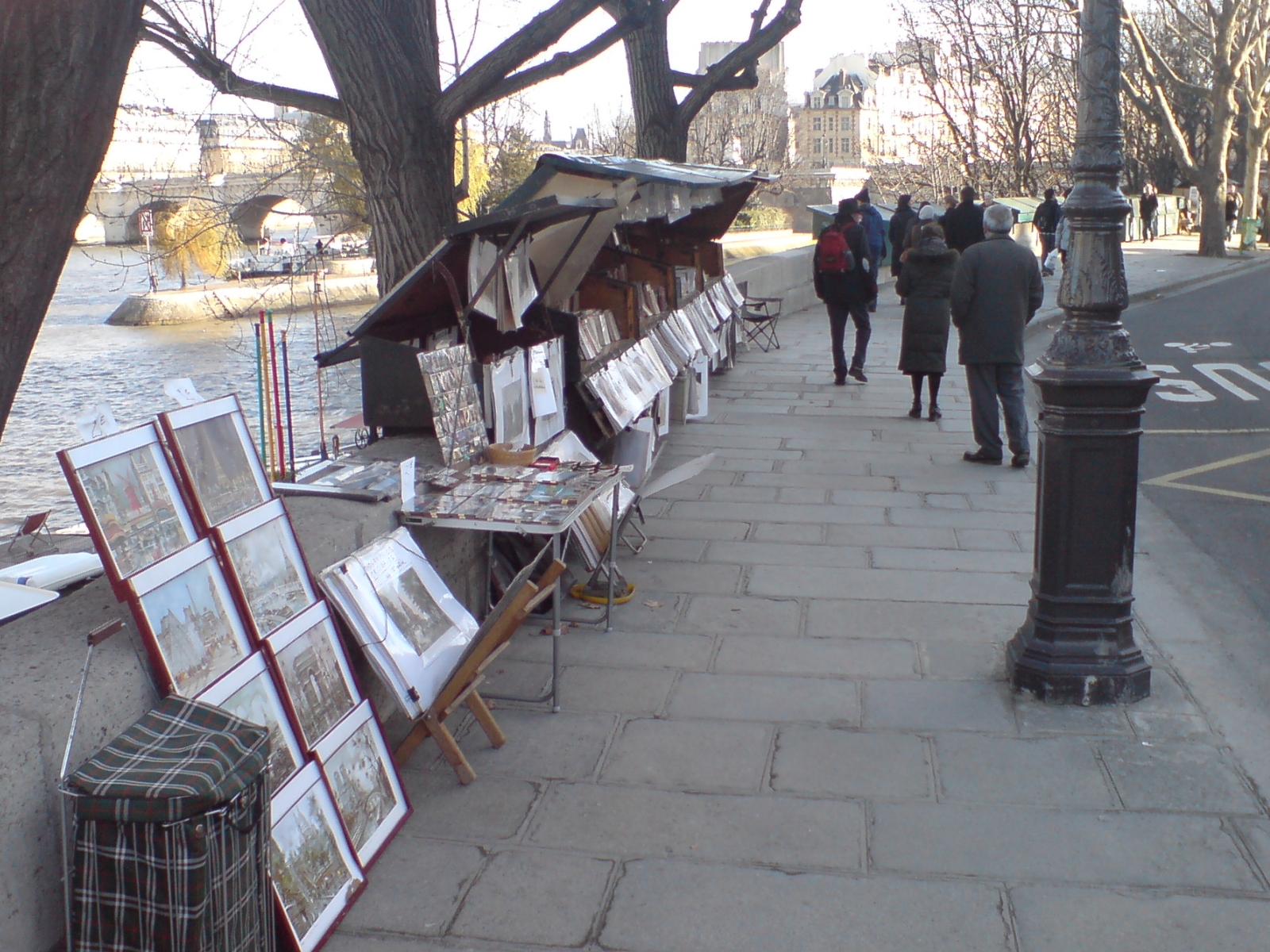
Where: the Seine quais, the bridges, the paths near Notre-Dame.
How it works: Someone walking towards you bends down, picks up a gold-coloured ring at your feet, and asks if it is yours. It is not. They insist you take it — it is your lucky day, they cannot wear it. Once it is in your hand they ask for money for a coffee, or for a “reward”, and become difficult if you refuse.
What to do: Do not take it. Say non and keep going. The ring is brass, costs almost nothing, and there is a bag of them.
4. The shell game
Where: the bridges, the quais near Pont Neuf, the area below Sacré-Cœur.
How it works: Three cups or three cards, a ball, a crowd of enthusiastic bystanders winning money easily. The bystanders are part of the operation. The game is not winnable; the ball is not under any of the cups. When the police appear, everyone scatters, which tells you what you need to know.
What to do: Walk past. Do not stop even to watch, because a stationary spectator is a pickpocketing target, which is frequently the real purpose of the crowd.
5. The unsolicited portrait
Where: Montmartre, particularly the streets around Place du Tertre.
How it works: Someone starts sketching you without asking, then presents the finished drawing and demands payment, often €40 or more, with the implication that you have commissioned it.
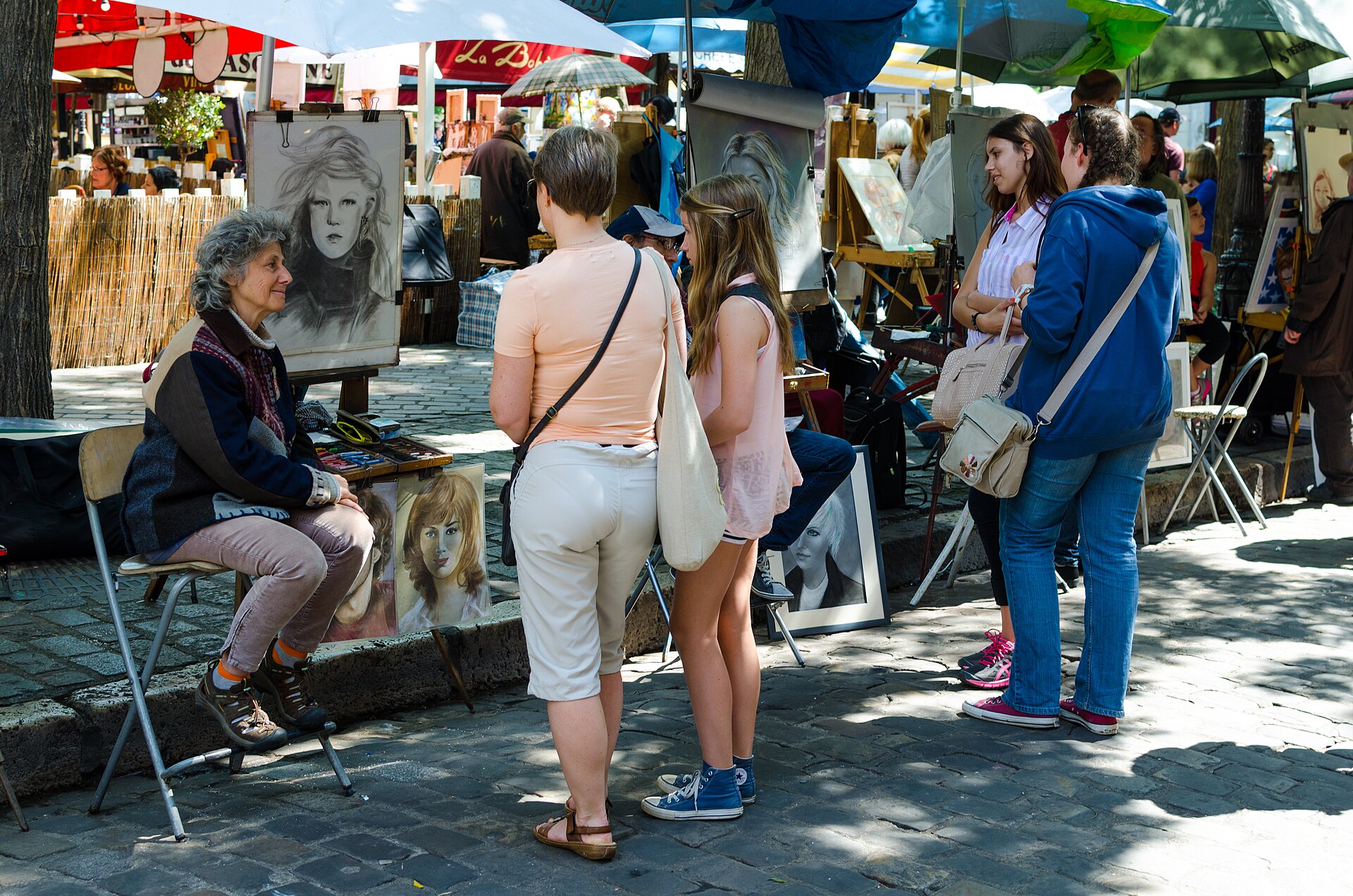
What to do: Say no at the first sign and move. You owe nothing for something you did not commission. If you genuinely want a portrait, the licensed artists work from allocated pitches on the square itself, agree a price first, and are worth the money. Our Montmartre guide covers the difference.
6. The “free” rose or sprig of lavender
Where: restaurant terraces, the Marais, Saint-Germain, Montmartre, anywhere couples sit outdoors.
How it works: A rose is pressed into your partner’s hand as a gift. Then the price is quoted to you, in front of them, in public, at a table. It works because refusing feels ungallant.
What to do: Do not let it be handed over. A firm non before it reaches the table. Refusing is not rude; the manoeuvre is.
7. The tour ticket that is not a tour ticket
Where: outside the Eiffel Tower, the Louvre, Versailles, and online.
How it works: A reseller charges a substantial premium for “skip the line” access that is, in fact, either the standard timed ticket you could have bought at face value, or entry to something with no queue at all. Occasionally the ticket is simply invalid.
What to do: Buy from the operator’s own site — toureiffel.paris, louvre.fr, chateauversailles.fr — and from nowhere else. The Eiffel Tower guide lists the real ticket types and prices, and the city pass comparison covers the bundles that genuinely save money and the many that do not.
8. The taxi that will not use the meter
Where: airport arrival halls, the main stations, outside busy nightclubs.
How it works: A driver approaches you inside the terminal or the concourse offering a ride, then quotes a price well above the real fare. Licensed Paris taxis do not tout for business inside terminals — that is the tell.
What to do: Use the marked rank outside, or an app. Taxis from Charles de Gaulle and Orly charge a fixed, published fare into each half of the city rather than running a meter, so you cannot be overcharged if you take a legitimate one. Our taxi and Uber guide sets out the fares, and the airport transfer guide covers the alternatives.
9. The ticket-machine “helper”
Where: Metro and RER ticket halls, especially at Gare du Nord and the airport stations.
How it works: A stranger offers to help you use the machine, then either pockets your change, sells you a used or invalid ticket at full price, or watches your PIN. A variant is being sold a “ticket” by someone standing near the barrier — these are frequently used singles that will not open a gate and will earn you a fine.
What to do: Buy from the machine yourself or from the staffed window. Refuse help firmly. Never buy a ticket from a person. Our tickets and passes guide explains what to buy and the Metro guide how to use it.
10. The turnstile tailgater
Where: Metro barriers throughout the network.
How it works: Someone pushes through the gate immediately behind you, using your ticket’s opening. Mostly this is fare evasion rather than theft, but it puts a stranger against your back and your bag, which is where the second version of this comes in.
What to do: Let the gate close behind you. If you feel someone crowding you at a barrier, put a hand on your bag and step forward briskly.
11. The bird seed and the pigeons
Where: Notre-Dame forecourt, Trocadéro, the Tuileries.
How it works: Someone puts seed in your child’s hand, or on your shoulder, so that a photograph happens. Then payment is requested for the experience.
What to do: Do not let anything be placed in anyone’s hand. Move on.
12. The card-machine switch
Where: tourist restaurants and bars near the big sights.
How it works: The machine is presented already showing an amount, or it offers to charge you in your home currency at a punitive rate, or a “tip” line is pre-filled. None of it is illegal; all of it relies on you not looking.
What to do: Read the amount before you tap. Always decline conversion into your own currency — that rate is chosen by the machine’s operator and is worse than your bank’s. And remember service is included by law in France, so a tip is rounding up rather than a percentage. Our money-saving guide covers the rest.
13. The restaurant that adds what you did not order
Where: the tourist strips — Rue de la Huchette, the Champs-Élysées, the streets immediately around Notre-Dame and beneath the Eiffel Tower.
How it works: Bottled water arrives without being ordered, and appears on the bill at €6. A bread basket is charged. The “special” recommended by the waiter turns out to be priced by weight. The menu outside shows a €14 formule and the one on the table does not.
What to do: French law requires prices to be displayed outside; read them before you sit. Ask for une carafe d’eau, which is free tap water and which every restaurant must provide. Query anything on the bill you did not order — it will usually come off without argument. And use the three warning signs: photographs of the food outside, a menu in six languages, and someone on the pavement inviting you in. Our restaurant guide and cheap eats guide cover where to go instead.
14. The fake official
Where: occasionally on the Metro and around the stations.
How it works: Someone in plain clothes claims to be a ticket inspector or a police officer, asks to see your tickets and then your wallet “to check for counterfeit notes”, and takes something from it.
What to do: Real RATP inspectors work in groups, wear a visible armband or uniform, and carry a card they will show you if asked. No police officer or inspector in France will ever need to inspect the contents of your wallet in the street. Ask for identification, keep your wallet closed, and offer to walk to a staffed office or a police station — a fake will lose interest instantly.
15. The accommodation that does not exist
Where: online, before you travel.
How it works: A listing at a suspiciously good price, a request to pay by bank transfer or outside the platform, an apartment that either does not exist or is not the owner’s to let. The Paris rental market is tight enough that people talk themselves into it.
What to do: Book through a platform and pay through it, never by transfer. Be sceptical of a central apartment at a third of the going rate. Reverse-image-search the photographs. Our apartment versus hotel guide and the where to stay guide cover what a realistic price actually looks like.
Where the scams cluster
Risk in Paris is geographically concentrated to a remarkable degree. Roughly eight locations account for most of what happens to visitors.
| Location | What operates there | The tell |
|---|---|---|
| Sacré-Cœur steps and funicular | Bracelets, shell games | Young men standing still on a route people climb |
| Louvre entrances and the Tuileries | Petitions | Clipboards, “do you speak English?” |
| Eiffel Tower and Trocadéro | Street sellers, ticket resellers, pickpockets | Anyone selling anything at all |
| Seine quais and the bridges | Gold ring, shell games | Someone bending down as you pass |
| RER B from CDG | Pickpocketing, ticket “helpers” | Crowding at doors as they close |
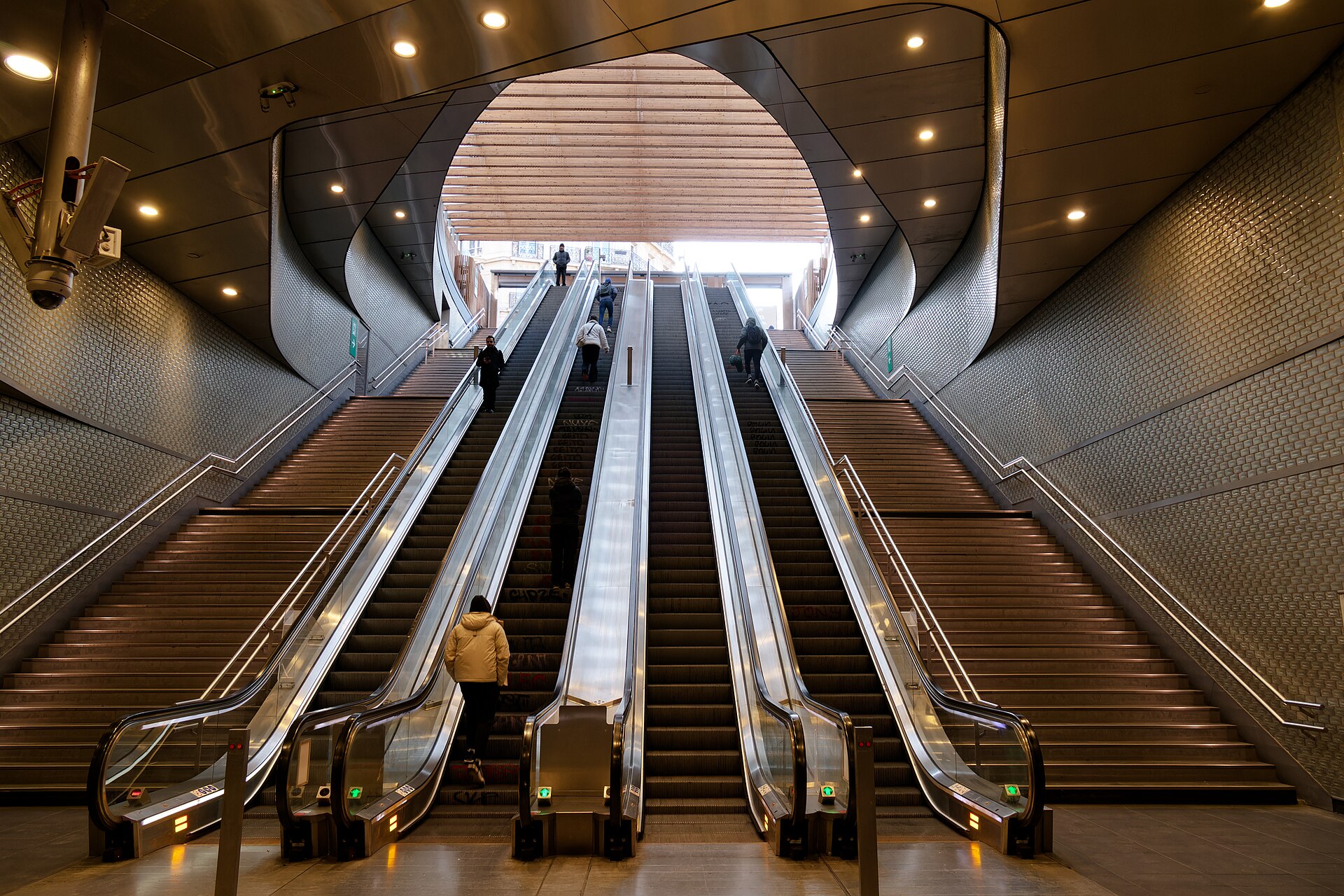
| Châtelet–Les Halles | Pickpocketing | Long escalators, dense crowds |
| Gare du Nord ticket hall | Fake tickets, machine helpers | Anyone offering to help you buy |
| Rue de la Huchette and the Champs-Élysées | Restaurant overcharging | Menus in six languages, touts on the pavement |
Notice what is not on that list: your hotel neighbourhood, the Marais in the evening, the markets, the Left Bank quais away from the bridges, most of the Metro, and essentially every part of Paris that Parisians actually use. Scams follow visitors, not the other way round.
Six phrases worth knowing
- Non, merci. The whole of the defence, in two words. Firm, polite, final.
- Laissez-moi tranquille. “Leave me alone.” For when the first refusal is ignored.
- Une carafe d’eau, s’il vous plaît. Free tap water, which every restaurant must supply.
- Je n’ai pas commandé ça. “I didn’t order that.” Say it when the water and bread arrive uninvited.
- L’addition, s’il vous plaît. “The bill, please.” Check it before you pay.
- Je vais appeler la police. “I’m going to call the police.” Rarely needed and remarkably effective when it is.
Things that look like scams and are not
Worth saying, because visitors sometimes bristle at perfectly normal French practice.
- Two-tier café pricing. Coffee is cheaper standing at the bar than sitting on the terrace. This is published on the price list, entirely legal and applies to everyone. It is not a tourist surcharge.
- A €1 charge for a public toilet in a department store or station. Normal. The street sanisettes are free.
- The waiter not bringing the bill. In France it is considered rude to rush you. Ask for it.
- Cheese and dessert as separate courses on the set menu. Not an upsell — that is simply how a French menu is built.
- Bag searches at museum and shop entrances. Standard security across the country, and quick.
- Being asked for identity documents by uniformed police. Legal in France and occasionally routine. Carry a photocopy or a photograph of your passport; the original can stay in the hotel safe.
- The licensed artists on Place du Tertre. They hold numbered pitches, and if you agree a price first, you are dealing with a professional.
- Restaurants closed on Sunday and Monday. Not a snub. Most of the city takes those days off.
The online scams that happen before you arrive
Three more are worth knowing about because they cost more than anything on the street and they happen while you are still at home.
The fake official website. Search for “Eiffel Tower tickets” or “Louvre tickets” and the first results are frequently paid advertisements from resellers rather than the operator. They are not illegal and the tickets are usually genuine, but you will pay a large premium for a booking you could have made yourself in two minutes. Type the operator’s address directly: toureiffel.paris, louvre.fr, chateauversailles.fr, musee-orsay.fr.
The fake booking confirmation. An email that looks like it comes from your hotel or a booking platform, arriving a day or two before your trip, asking you to “reconfirm” your card details through a link. Platforms do not do this. If in doubt, log in through the app rather than the email, or phone the hotel.
The airport transfer that never arrives. Prepaid private transfers booked through unfamiliar third-party sites occasionally do not turn up, and the money is gone. Either book through a well-known operator or simply take the RER on the €14 flat fare and a taxi at the fixed published rate, both of which are covered in our airport transfer guide.
If you get caught anyway
It happens to careful people. What matters is the first twenty minutes.
- Cancel the cards immediately, from where you are standing. Save your bank’s 24-hour number somewhere that is not in your wallet.
- Report it to the police. Go to any commissariat; you need the report for an insurance claim. France also runs an online pre-complaint system for thefts without violence, which lets you fill in the details before you go and shortens the visit considerably.
- Contact your consulate if a passport has gone. Most can issue an emergency travel document quickly, and most want the police report first.
- Lock the phone remotely, and wipe it if it holds anything sensitive.
- Tell your insurer within their time limit, which is often 24 or 48 hours. See our travel insurance guide for what cover actually pays out and what it does not.
And then carry on with your holiday. A stolen wallet is a bad hour, not a ruined trip, provided you split your money in the first place and did not have everything you own in one bag.
The five-minute preparation that prevents most of this
- Photograph your passport, cards and insurance policy, and email them to yourself.
- Write down your bank’s lost-card number somewhere that is not your wallet.
- Split your money: one card and some cash on you, the rest in the hotel safe.
- Choose a bag that zips and can be worn across the body.
- Set your phone to lock immediately and enable remote wipe.
- Read the fifteen scripts above once. That is genuinely the whole defence.
Our first-time Paris tips and packing list cover the rest of the preparation, and the safety guide covers the wider picture.
Frequently asked questions
How common are scams in Paris?
Common in specific places and rare everywhere else. If your trip includes Sacré-Cœur, the Louvre, the Eiffel Tower and the RER B from the airport, you will probably be approached at least once. Almost nobody who says non and keeps walking loses anything.
What is the most common scam in Paris?
The petition, closely followed by the friendship bracelet. Both are really pickpocketing operations with a social pretext attached — the script exists to occupy your hands and your attention while someone else works.
Are Paris taxis a scam?
No. Licensed Paris taxis are regulated and airport fares are fixed and published, which removes the most common overcharging problem entirely. The scam is the unlicensed driver who approaches you inside a terminal or a station. Use the rank or an app.
Is it rude to ignore people who approach you in Paris?
No. Parisians do it without a second thought, and a stranger who approaches a tourist in the street near a major sight is not looking for conversation. Say non, merci once and keep moving.
Should I carry my passport in Paris?
French law requires you to be able to prove your identity, but a photocopy or a clear photograph is normally sufficient for routine purposes, and the original is safer in the hotel. Carry the original if you have a reason to — an onward flight the same day, or a hotel check-in.
Are there scams at Paris airports?
Mainly unlicensed taxi touts inside the terminals and the poor exchange rates at the currency kiosks. Both are avoidable: use the official taxi rank or the RER on the €14 flat fare, and withdraw euros from a bank ATM in the city rather than changing money at the airport.
Is the Paris Metro safe from scams?
The Metro is safe to travel on and is the highest-theft environment in the city — both are true. The scams there are ticket “helpers”, turnstile crowding and straightforward pickpocketing on the busiest lines. A zipped bag held in front of you handles nearly all of it.
What should I do if someone puts a bracelet on my wrist?
Pull your arm back at the first touch. If it is already tied, walk away without paying and cut it off later. Nobody follows you, and refusing is what eventually makes the pitch unprofitable.
Do scams get worse in summer?
Yes, in proportion to visitor numbers — July and August are the busiest months for both crowds and the people who work them. Late autumn and winter are noticeably quieter in every sense. See the best time to visit.
Scams and pickpocketing overlap but are not the same trade. A scam needs your consent to something — a signature, a bracelet, a bogus fine — while a pickpocket needs only your inattention for four seconds. If it is the second you are worried about, our guide to where pickpockets in Paris actually work maps the specific stations, monuments and terraces where it clusters, and what to do in the hour after it happens.
Related Paris Guides
- Is Paris safe? — the honest 2026 safety guide
- The safest areas of Paris — arrondissement by arrondissement
- First-time Paris tips — what nobody warns you about
- Taxis and Uber in Paris — fixed fares and how they work
- Paris tickets and passes — what to buy and where
- Money-saving tips for Paris — including the card-machine trap
- Paris travel insurance — what actually pays out
- The complete Paris itinerary guide — plans for one to ten days
Photo Credits
Bouquinistes: Wooden Box Shops Along The Seine by Ingolfson, public domain, via Wikimedia Commons.
Place du Tertre: Artist 2, Place du Tertre, Paris 5 July 2013 by Shepard4711, CC BY-SA 2.0, via Wikimedia Commons.
Châtelet–Les Halles: Chatelet les Halles — les escaliers mécaniques by FrT-eclairage, CC BY-SA 2.0, via Wikimedia Commons.