The Perfect Paris Itinerary: Day-by-Day Plans for 1 to 10 Days
Routes for one to ten days, built around the city's geography rather than a checklist.
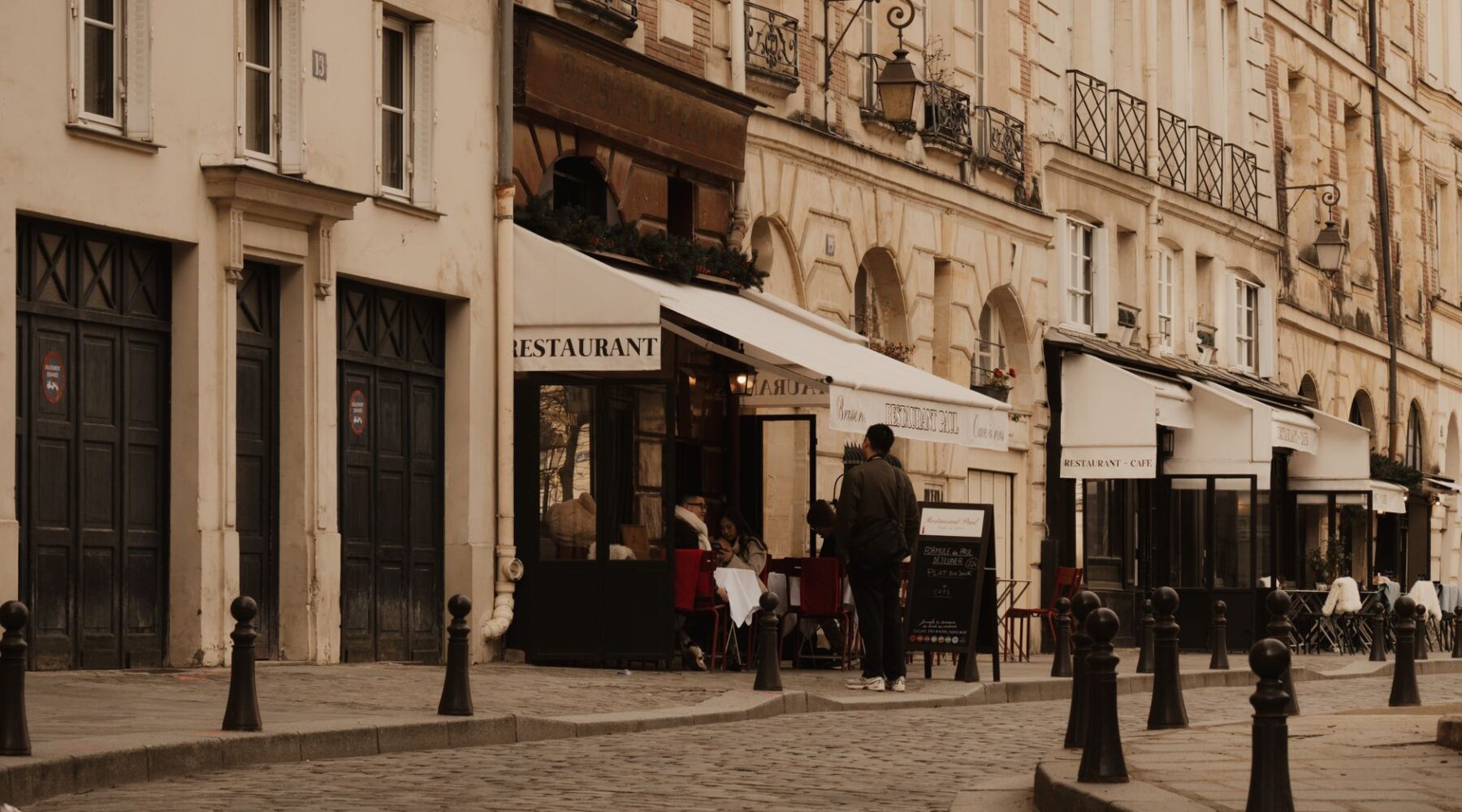
The single most common mistake visitors make in Paris is treating the city as a checklist rather than a shape. They land with the Eiffel Tower, the Louvre, Notre-Dame, Montmartre and Versailles written down in that order, then spend four days riding the Metro back and forth across the Seine to tick them off. A good paris itinerary does the opposite: it groups the city geographically, accepts that you will not see everything, and leaves enough slack that a two-hour lunch does not derail the afternoon.
This is the master plan for that. Below you will find day-by-day routes for trips of one to ten days, the fixed rules that make any of them work — which museums shut on which day, how long the queues really run, what has to be booked weeks ahead — and an honest account of what to cut when the days get short. Prices were checked in September 2026; treat them as the right order of magnitude rather than gospel, because French museum tariffs moved sharply in January 2026 and will move again.
How many days do you actually need?
The honest answer is five. Five days is the point where Paris stops being a sequence of monuments and starts being a place you have some feel for — long enough to get one full museum day, one day trip, one aimless neighbourhood day and still have a morning spare when it rains. Anything under three days and you are sampling. Anything over eight and you are into second-tier museums and repeat visits, which is a fine way to spend a week but a different kind of trip.
Most people do not get to choose. You have the days you have, so the question is what to do with them. Here is what each length realistically buys you.
| Trip length | What fits comfortably | What you give up | Best for |
|---|---|---|---|
| 1 day | One riverside walk, one major sight, one neighbourhood evening | Any museum done properly; Versailles; Montmartre | Layovers, Eurostar day trips |
| 2 days | The classic core plus one museum, split Left Bank and Right Bank | Day trips, second-tier museums, unplanned time | Weekend city breaks |
| 3 days | All the headline sights, one museum day, Montmartre | Versailles, unless you sacrifice a whole day | First-timers with limited leave |
| 4 days | The above plus Versailles or one relaxed neighbourhood day | A second day trip; the outer arrondissements | The most common Paris trip |
| 5 days | Everything above plus real slack and a food-led day | Very little that matters | The sweet spot |
| 7 days | Two day trips, the smaller museums, whole afternoons doing nothing | Nothing you will miss | Repeat visitors, slow travellers |
| 10 days | Paris plus Normandy or the Loire as an overnight | Nothing — start planning a second city | Once-in-a-lifetime trips |
If you want that argument made at length rather than in a table, we have a whole piece on how many days you need in Paris that works through the trade-offs by traveller type.
What everything costs
Before the routes, the money. These are the recurring costs that shape any itinerary, checked September 2026. The big change this year is that France introduced two-tier pricing at its state museums in January: visitors from outside the European Economic Area now pay materially more at the Louvre and Versailles than EEA residents do. Most competing guides have not caught up, so check which price applies to you.
| Item | Price | Worth knowing |
|---|---|---|
| Single Metro or RER ticket, zone 1 | €2.55 | The carnet of ten lost its discount on 1 January 2026 |
| Navigo Jour day pass | €12.30 | Pays back from roughly five journeys |
| Navigo Découverte weekly | €32.40 plus €5 card fee | Monday to Sunday only, all zones including CDG |
| Airport flat fare, CDG or Orly | €14 | A specific ticket — ask for it by name |
| Louvre | €22 EEA / €32 non-EEA | The non-EEA price rose 45% in January 2026 |
| Versailles Passport | €22–32 EEA / €25–35 non-EEA | High and low season pricing; under 18 free |
| Eiffel Tower, stairs to 2nd floor | €14.80 | The cheapest and quietest way up |
| Eiffel Tower, lift to 2nd floor | €23.50 | The floor with the better view |
| Eiffel Tower, lift to summit | €36.70 | Sells out six to eight weeks ahead in summer |
| Paris Museum Pass, 2 / 4 / 6 days | €90 / €109 / €139 | Does not include the Eiffel Tower |
| Coffee standing at the bar | €1.50–2.50 | Sitting on the terrace costs roughly double |
| Bakery lunch: sandwich, pastry, water | €8–12 | The reason picnics beat restaurant lunches |
| Two-course lunch formule | €19–28 | The same kitchen charges half again at dinner |
That last line is the most useful budgeting fact in Paris. Restaurants that charge €45 for three courses at eight in the evening run a two-course lunch menu for €22, often with the same chef and the same produce. Build your itinerary around big lunches and light dinners and you will eat better for less. Our full breakdown of what a Paris trip costs goes through daily budgets by travel style, and the money-saving guide covers the rest.
The six rules that make any Paris itinerary work
These apply regardless of how long you are staying. Get them wrong and no amount of clever routing saves the trip.
1. Paris is smaller than it looks on the map
The city inside the Périphérique is about six miles across. From Notre-Dame to the Eiffel Tower is a 45-minute walk along the river, and it is one of the great walks in Europe. From the Louvre to the Musée d’Orsay is eight minutes on foot across a footbridge. Visitors habitually take the Metro for journeys that are faster and infinitely more pleasant on foot, then complain they never saw the city. Use the Metro to cross the city, not to cross a neighbourhood, and read our guide to walking Paris for the routes that link up.
2. Museums close on fixed days, and not the same day
This is the rule that ruins the most itineraries. The Louvre closes on Tuesdays. The Musée d’Orsay closes on Mondays. The Musée Rodin and the Musée Picasso close on Mondays; the Musée de l’Orangerie closes on Tuesdays; the Catacombs close on Mondays; the Château de Versailles closes on Mondays. Sainte-Chapelle, the Arc de Triomphe and the Eiffel Tower open every day.
In practice that means: never plan a museum-heavy day on a Monday or Tuesday without checking each one individually, and if your trip includes both, put the Louvre on Monday and the Orsay on Tuesday rather than the reverse. Our museums guide lists the closure days for everything worth visiting in one place.
3. Book the timed things before you book anything else
Three sights genuinely sell out: the Eiffel Tower summit, the Louvre at peak hours, and Sainte-Chapelle on sunny mornings. The Eiffel Tower summit lift releases tickets roughly sixty days out and they disappear within days in July and August. The Louvre requires a timed slot for everyone, pass-holder or not, and the 9am slots go first. Versailles requires timed entry for the château itself.
Almost everything else in Paris — the Orsay, Rodin, the Orangerie, Sacré-Cœur, the parks, the markets — you can turn up for. Do not let a booking platform convince you otherwise, and be sceptical of third-party sellers charging a €15 premium for a “skip the line” ticket that is simply the standard timed ticket with a markup.
4. Two big things a day is the ceiling
Not two sights. Two big things: a major museum, a monument with a queue, a formal lunch, a day trip. Add a third and the day becomes a forced march. The days below all follow the same pattern — one anchor in the morning, one in the afternoon or evening, unstructured walking in between. That walking is not padding. It is where Paris actually happens.
5. Sunday and Monday are different cities
Many restaurants close on Sunday evening and all day Monday. Most bakeries take one day off a week, often Monday or Wednesday. The big department stores open on Sundays now, but plenty of independent shops do not. Conversely, Sunday morning is the best time in the city: the markets are at full volume, the streets are quiet, and a handful of central roads close to cars entirely. Plan shopping for Saturday, markets for Sunday morning and museums for Monday.
6. Where you stay decides how much of the day you lose
Twenty minutes each way to a cheaper hotel out in the 15th is forty minutes a day, which over five days is a full afternoon. Staying in the 1st through 7th, or in the Marais or the Latin Quarter, means you can go back to the room at four, change, and be out again at six without it costing you anything. Our guide to where to stay and the arrondissement comparison work through the trade-offs.
One day in Paris
One day is not enough and everyone knows it, so the goal changes: instead of seeing Paris you are trying to leave with a coherent impression of it. That means one river, one monument, one meal and one neighbourhood, all within walking distance of each other. Resist the temptation to add Montmartre or Versailles — both are a 45-minute round trip from the centre and will eat the day.
The route
- 8.00 — Coffee and a croissant standing at a bar counter near your hotel. Sitting down doubles the price and costs you twenty minutes.
- 8.30 — Notre-Dame and the Île de la Cité. The cathedral reopened in December 2024 and entry is free; the queue is shortest before nine. Walk the length of the island afterwards to Place Dauphine, which almost nobody finds.
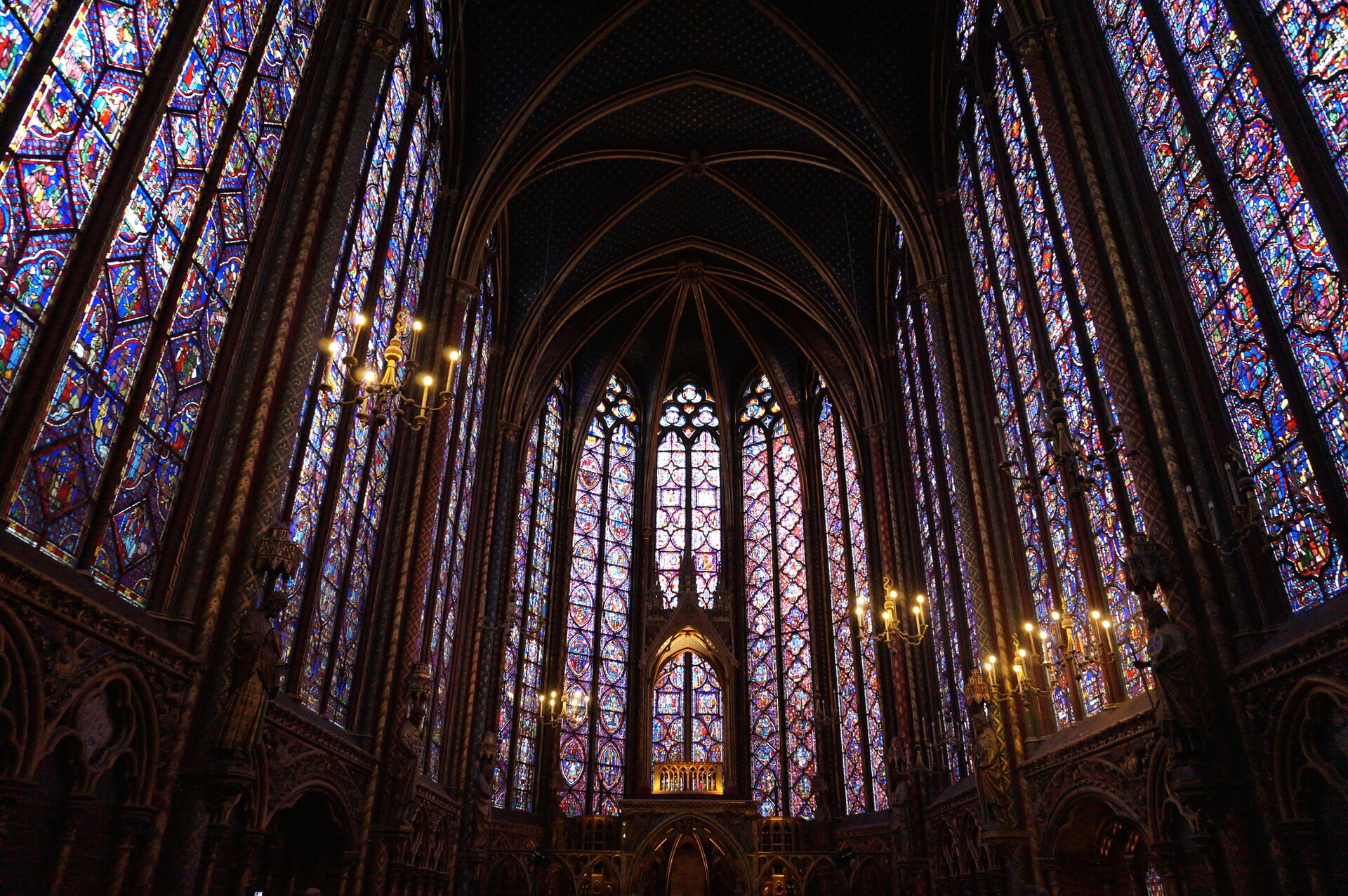
- 10.00 — Sainte-Chapelle, two minutes away. Fifteen minutes inside is enough and the windows are the most purely beautiful thing in the city. Book the slot.
- 11.00 — Cross to the Left Bank and walk west along the quais through Saint-Germain. Stop at a bakery for lunch to carry.
- 13.00 — Musée d’Orsay for ninety minutes, not four. Go straight to the fifth-floor Impressionists, then leave. This is the right museum for a single day: it is a third the size of the Louvre and twice as legible.
- 15.30 — Walk the river west to the Eiffel Tower, roughly forty minutes, past the Musée Rodin gardens if you have the energy. Go up the stairs to the second floor for €14.80 rather than queueing for the lift.
- 19.00 — Dinner in the 7th around Rue Cler, or head back to the Marais if you want more life. Either way, the tower sparkles for five minutes on the hour after dark, and it is worth timing your walk home for it.
The honest verdict: if you have one day, skip the Louvre entirely. Ninety minutes there is worse than not going — you queue, you get herded past the Mona Lisa in a scrum, and you leave having seen a painting through six phone screens. The Orsay in the same time is a genuinely good visit.
Two days in Paris
Two days is the classic weekend and the cleanest itinerary to build, because the city divides so neatly. Give one day to the Right Bank and one to the Left, and you barely use the Metro at all.
Day 1 — Right Bank
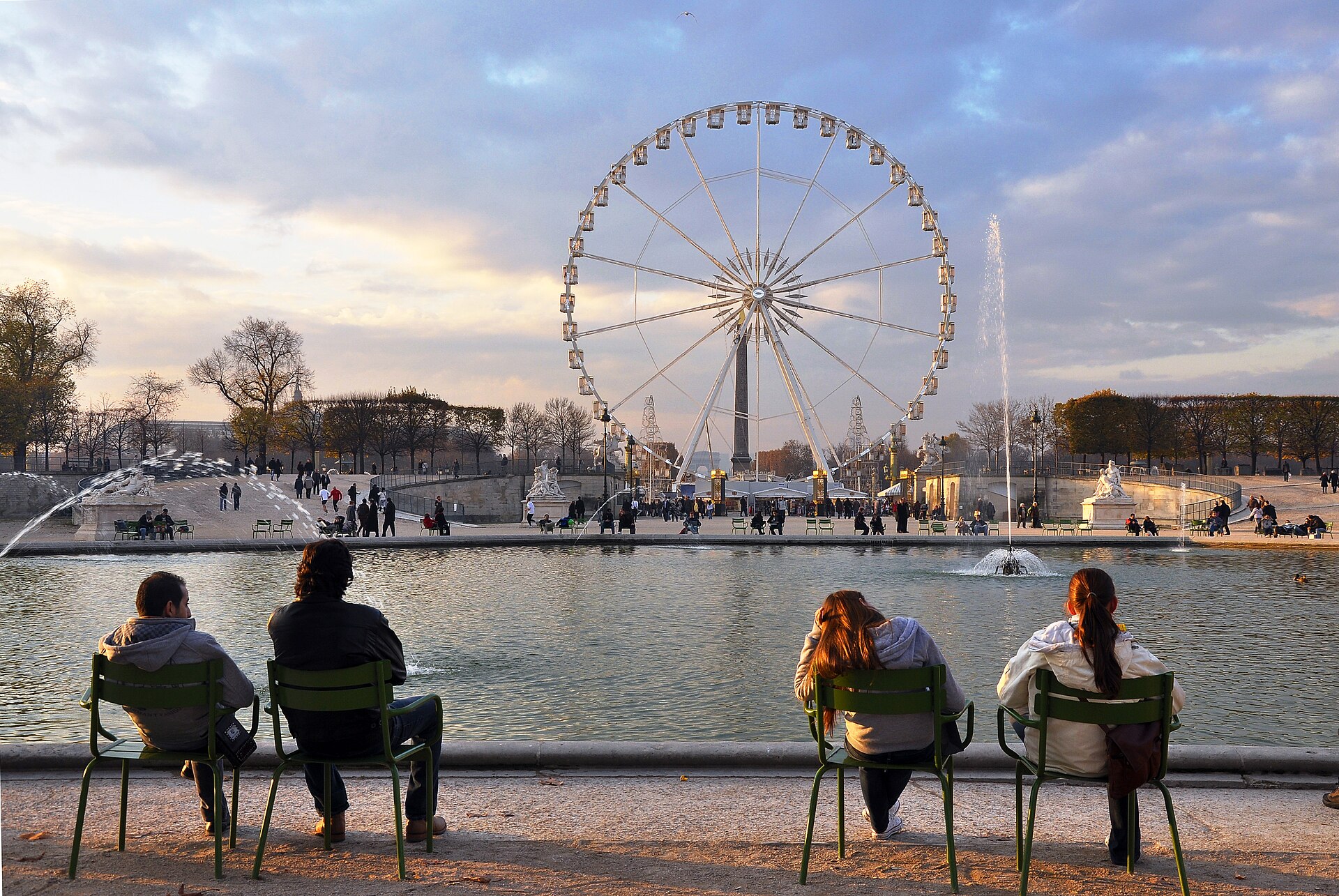
Start at the Louvre with a 9am slot. Three hours is the sensible maximum; pick two wings and ignore the rest. Come out into the Tuileries, buy lunch from a stall or bring it, and take one of the green chairs by the octagonal basin. Walk on through Place de la Concorde and up the Champs-Élysées — which is, honestly, a shopping street with better architecture than shops — to the Arc de Triomphe. The rooftop terrace is the better of the city’s two great viewpoints, because from it you can see the Eiffel Tower, which you cannot do from the Eiffel Tower. Use the underpass to reach it; people are still trying to cross that roundabout on foot.
Evening in the Marais: the narrow streets north of Rue de Rivoli have the densest concentration of good, small, reasonably priced restaurants in central Paris, and unlike much of the city a lot of them open on Sundays.
Day 2 — Left Bank and the tower
Morning at the Musée d’Orsay, then the Latin Quarter: the Panthéon, the covered market on Rue Mouffetard, the Jardin des Plantes if the weather holds. Lunch on a side street rather than on Boulevard Saint-Michel, where the prices are tourist prices and the food is worse for it.
Afternoon at the Eiffel Tower, ideally booked for late afternoon so you get daylight and dusk in one visit. Finish with a Seine cruise — the one boat trip in Paris that genuinely earns its ticket, because the city was built to be seen from the water and the bridges are the argument.
Three days in Paris
Three days is where a trip starts to feel complete rather than compressed. Keep the two-day plan above and add the day that most people wish they had: Montmartre and the north.
Day 3 — Montmartre and the north
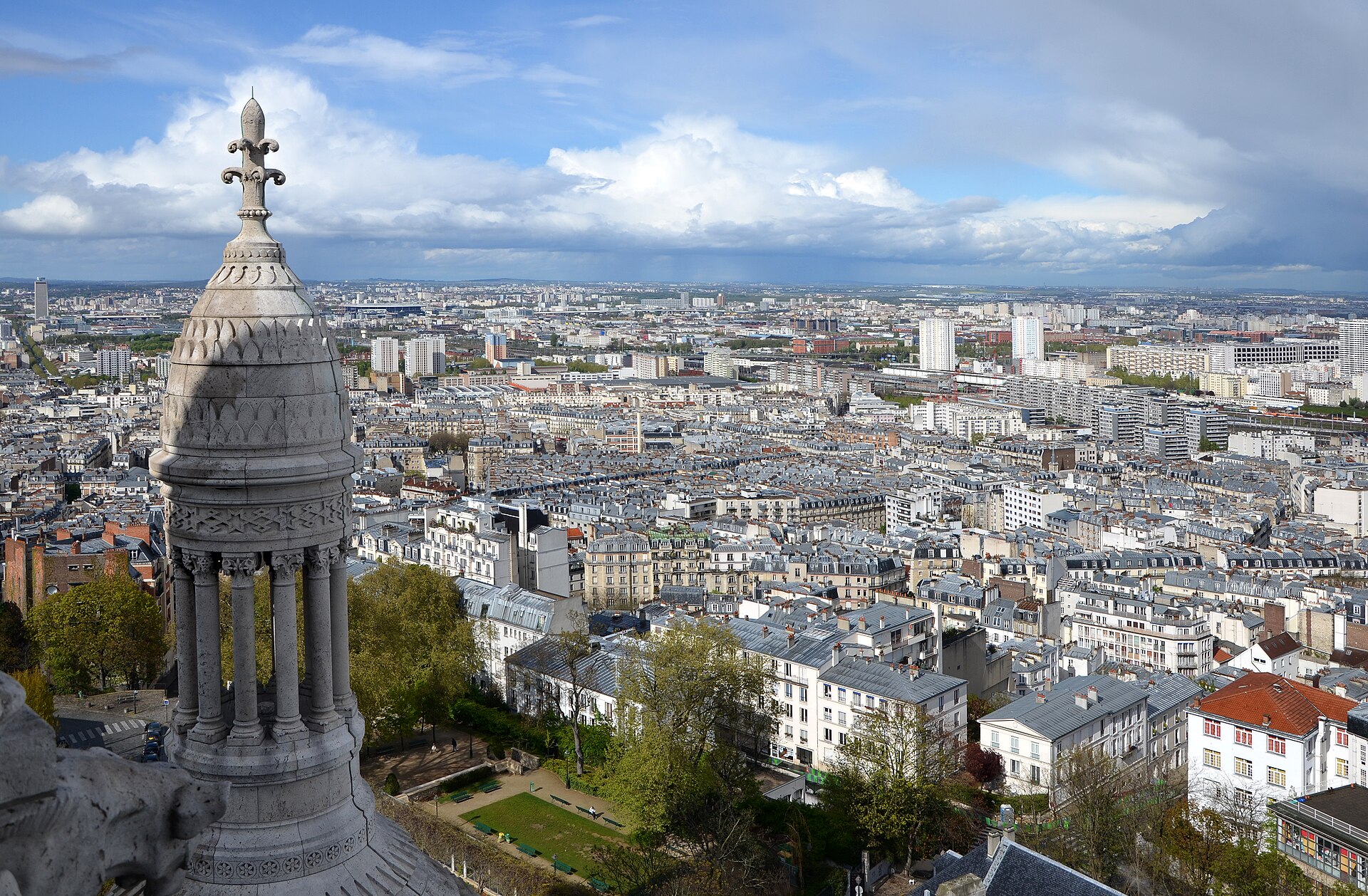
- Morning — Take the Metro to Abbesses, which has the deepest station lift in the network and a spectacular tiled stairwell, then walk up rather than take the funicular. Sacré-Cœur is free to enter and the terrace view is free too; the dome costs extra and is not worth it unless you like a stair climb.
- Midday — Get lost in the streets north and west of the basilica. Place du Tertre with its portrait painters is the one part of Montmartre to walk straight through; the village Montmartre people come for is two streets in any direction from it.
- Afternoon — Down the hill to Pigalle and along to the Opéra district for the Palais Garnier, which you can tour independently and which is more theatrically over-the-top than any palace in the city.
- Evening — Canal Saint-Martin for a drink by the water, or the Marais again if the first night worked.
What to cut if it rains: swap Montmartre for a museum day. The Orangerie’s two oval rooms of Monet water lilies take forty minutes and are the best-value ticket in Paris; the Musée Rodin’s garden is glorious but the indoor collection stands on its own. Our list of rainy-day options has the rest.
Four days in Paris
Four days is the most common length of Paris trip and the first point at which you can add Versailles without wrecking everything else. You have a choice to make.
Option A: add Versailles
Give the whole day to it. Versailles is a 35 to 60-minute journey on the RER C to Versailles Château–Rive Gauche, plus a ten-minute walk, and the estate is far larger than photographs suggest. Get the first train, do the château while the crowds are still arriving, then spend the afternoon in the gardens and at the Trianon palaces, which almost everyone skips and which are the better half of the visit. Remember it closes on Mondays, and check the fountain-show calendar because the gardens carry a separate charge on show days. The transport guide covers the routes in detail.
Option B: add a neighbourhood day instead
The alternative — and for repeat visitors the better one — is a day with no monuments in it at all. Morning at a market: the Marché d’Aligre in the 12th is the one Parisians actually shop at, and it runs Tuesday to Sunday mornings. Lunch in a wine bar. An afternoon walking the Coulée verte, the elevated park built on an old railway viaduct that runs three miles east from Bastille and predates New York’s High Line by fifteen years. Evening at a jazz club in the Latin Quarter or a rooftop bar.
If you are travelling with children, four days is also enough to fit a Disneyland day without cutting into central Paris — see the Disneyland guide and the family itinerary for how that reshapes the week.
Five days in Paris
Five is the sweet spot. You get everything above, plus the thing that separates a good trip from a hurried one: a day with nothing scheduled.
| Day | Morning | Afternoon | Evening |
|---|---|---|---|
| 1 | Île de la Cité, Notre-Dame, Sainte-Chapelle | Latin Quarter, Panthéon | Dinner in Saint-Germain |
| 2 | Louvre (9am slot) | Tuileries, Concorde, Champs-Élysées, Arc de Triomphe | Marais |
| 3 | Musée d’Orsay | Rodin garden, Invalides, walk to the tower | Eiffel Tower at dusk, Seine cruise |
| 4 | Versailles — the whole day, first train out | Something low-effort near the hotel | |
| 5 | Market and bakery breakfast | Montmartre, or whatever you have been meaning to go back to | Last dinner, booked in advance |
The fifth day is deliberately vague. By day five you will have found something — a street, a museum, a café — you want to return to, and returning to it is worth more than a fifth headline sight.
Six and seven days in Paris
At a week you can afford two day trips and still have five days in the city. The obvious pairing is Versailles plus one of the Impressionist or Gothic escapes.
The day trips worth taking
- Giverny — Monet’s garden and house, roughly 45 minutes by train to Vernon then a shuttle. Best from April to October; the garden is the point and in winter there is no garden. Pair it with the Orangerie and the Orsay for a coherent Impressionist thread through the week.
- Fontainebleau — A palace as grand as Versailles with a fraction of the crowds, plus a forest full of sandstone boulders that is one of the world’s great bouldering sites. The best value day trip from Paris.
- Reims and the Champagne houses — 45 minutes by TGV, a Gothic cathedral where French kings were crowned, and cellars cut into Roman chalk pits. Book a house tour before you go.
- Auvers-sur-Oise — Van Gogh’s last seventy days, an hour north, and small enough to do in an afternoon.
- Mont-Saint-Michel — Extraordinary, and a very long day: four to five hours each way. Only worth it as an overnight, or if you are prepared for fourteen hours door to door.
Our full day trips guide ranks them by how much of the day they cost against what you get.
What to do with the extra city days
Week-long trips are where the second-tier museums finally earn their place. The Musée de Cluny for medieval art in a Roman bath house. The Catacombs, which are genuinely unsettling and require booking. The Musée Rodin on a sunny afternoon. Père Lachaise cemetery, which is a hillside village of the dead and takes two unhurried hours. The smaller museums — Marmottan, Jacquemart-André, Nissim de Camondo — where you will sometimes have a room to yourself.
Add one food-led day: a food tour or a cooking class in the morning, a long lunch, an afternoon of nothing. And leave one whole afternoon genuinely unplanned. Every week-long Paris trip we have ever heard described fondly had one of those in it.
Eight to ten days in Paris
Beyond a week, the itinerary stops being a route and becomes a rhythm. Two or three days a week with a fixed anchor, the rest improvised. This is the length at which an overnight outside Paris makes sense — Normandy and the D-Day coast, the Loire châteaux, or two nights in Bruges, which is two hours by train and a completely different country in feel.
It is also the length at which a weekly Navigo Découverte pays for itself several times over, if your trip happens to line up with its Monday-to-Sunday validity. Ten days of single tickets at €2.55 will cost you far more.
A weekend in Paris: the Friday-to-Sunday version
A weekend is really two and a half days, and the half matters. If you land Friday evening, do not try to do anything ambitious with it: drop your bags, walk to the nearest brasserie and eat. Saturday is your Right Bank day. Sunday morning is the best morning of the week in Paris — go to a market, then use the quiet streets for the Left Bank walk. Aim to be at Gare du Nord or the airport with more time than you think you need, because Sunday afternoon transport into the airports is when the RER B chooses to be difficult.
One weekend-specific warning: Saturday at the Louvre and Saturday at the Eiffel Tower are both materially worse than the same visits midweek. If your weekend is the only option, book the earliest slot available for both and treat the rest of the day as a bonus.
Building your own Paris itinerary
If none of the templates above fits, the method is simple enough to do on the back of an envelope.
Step 1: fix the immovables
Write down the things with times attached — flights, trains, a restaurant booking, a timed Eiffel Tower slot, the day the museum you care about is closed. Everything else moves around these.
Step 2: group by geography, not by importance
Draw a rough map with the Seine across the middle. Put every sight you want on it. You will find they cluster: the Île de la Cité group, the Louvre–Tuileries–Concorde axis, the Orsay–Rodin–Invalides–Eiffel line, Montmartre on its hill, the Marais as a block. Each cluster is a half-day. You now have a number of half-days and a number of days, and the arithmetic tells you what does not fit.
Step 3: alternate heavy and light
A museum day followed by a walking day followed by a day trip. Two consecutive museum days is how people end up sitting in a hotel room at four in the afternoon feeling defeated by art.
Step 4: book the three bookable things and nothing else
Eiffel Tower, Louvre, Sainte-Chapelle. Plus one dinner you actually want, because good restaurants in Paris fill up and a spontaneous 8pm table at a place you have read about does not exist. Our full trip-planning guide and the step-by-step version cover the booking timeline in more detail.
Step 5: delete 20% of it
Whatever you have written, it is too much. Everyone’s first draft is too much. Take out the sight you added because a list told you to, not because you want to see it.
What to leave out
The house position, stated plainly, on things that appear on almost every Paris itinerary and should not be on yours.
- The Eiffel Tower summit, for most people. €36.70 buys you a second queue at altitude and a view in which everything is too small to identify. The second floor at €23.50 is the better view and the stairs to it at €14.80 are the best value ticket at the tower. Save the summit for a second visit.
- Lunch on the Champs-Élysées. €19 onion soup made from something that was never an onion. Walk two streets off it, or eat before you go.
- The hop-on hop-off bus. Paris traffic means it is slower than walking for the central loop and far slower than the Metro for anything else. A walking tour or a free walking tour gives you more for less.
- A museum pass on a three-day trip. The maths only works if you are doing two or more paid sights every single day. Our pass analysis and the city pass comparison run the numbers; the short version is that most visitors would be better off buying tickets individually.
- The free first-Sunday museum evenings, in high season. Free entry sounds like a saving right up until you are in a ninety-minute queue in the rain. Our guide to free museum access explains which ones are actually pleasant.
- Trying to fit Versailles into a two-day trip. It is half your holiday for one palace. Go to Versailles on a longer trip or not at all.
Where to base yourself for each length of trip
The right neighbourhood changes with the length of the stay, which is not obvious and costs people a lot of walking. On a short trip, centrality beats charm; on a long one, the reverse.
- One or two days — Stay in the 1st, 4th, 5th or 6th, as close to the Seine as the budget allows. You are buying minutes, not atmosphere. A dull room ten minutes from Notre-Dame beats a charming one in the 18th.
- Three or four days — The Marais (3rd and 4th) or Saint-Germain (6th) are the classic answers, and they deserve the reputation: central, walkable, full of places to eat late.
- Five days or more — Widen the net. The 9th around South Pigalle, the 11th around Oberkampf, Batignolles in the 17th and the 10th along Canal Saint-Martin all give you a neighbourhood to come home to rather than a hotel district, and cost noticeably less. Our Belleville and Oberkampf guide covers the eastern half of that.
- With children — Prioritise a lift in the building and a park within five minutes over anything else. The family accommodation guide is specific about which streets work.
One thing worth saying plainly: hotel rooms in central Paris are small. A “double” in the 6th is frequently 12 square metres, and photographs are taken with lenses that flatter. If space matters more than location, an apartment rather than a hotel is the honest fix, and it comes with a kitchen, which changes your food budget considerably.
Getting from the airport into the itinerary
The first two hours of a Paris trip set the tone, and they are the two hours most itineraries ignore. From Charles de Gaulle, the RER B runs to Gare du Nord, Châtelet and Saint-Michel in around 35 minutes on the €14 flat fare, and it is the fastest option by a distance — but it involves stairs, crowds and, on a bad evening, a strike. From Orly, the Orlyval plus RER B combination or the Orlybus both work on the same flat fare, and the tram T7 is cheap and slow.
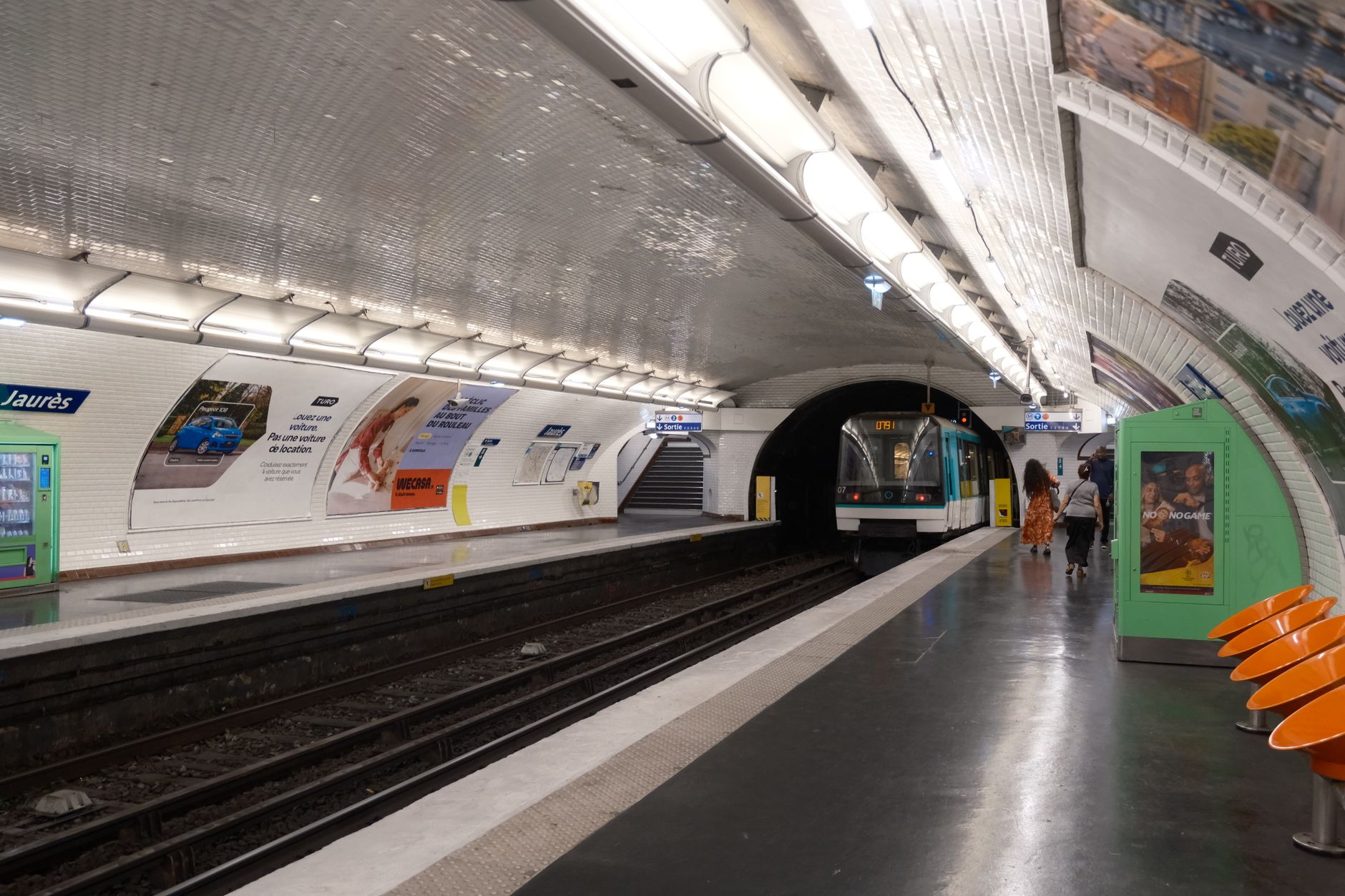
A taxi from CDG to the Right Bank is a fixed fare, which is unusual and useful: you cannot be overcharged, and with two or more people and luggage it competes on price with four RER tickets. Our airport transfer guide compares them properly, and the taxi and Uber guide explains the fixed-fare rules. Whatever you choose, do not schedule anything for the first three hours after you land beyond finding food.
Seasonal adjustments
The same itinerary behaves differently across the year. In July and August the queues double, half the good restaurants close for the annual holiday, and the city is genuinely hot with very little air conditioning — start earlier, plan indoor afternoons, and book everything. In spring the gardens do the work and outdoor time is worth more than museum time. In autumn the light is the best it gets and the crowds thin sharply after the second week of September. In winter, daylight runs roughly 8.30am to 5pm, which shortens every day by a third — build itineraries around two indoor anchors rather than long walks, and lean into the winter programme of covered passages, department store windows and long lunches.
Our guide to the best time to visit breaks the year down properly. The short version: late September and early October are the best two weeks in Paris, and February is the cheapest.
When the plan goes wrong
It will, at least once. Three failure modes account for almost all of it, and each has a fix that takes five minutes rather than ruining an afternoon.
A strike. French transport strikes are announced days ahead and are usually partial rather than total — a line running one train in three rather than nothing. Check the Île-de-France Mobilités app the night before, and if a strike is on, walk. The distances in central Paris are genuinely walkable and the buses fill in the gaps. Vélib’ bikes are the other answer; see the Vélib’ guide.
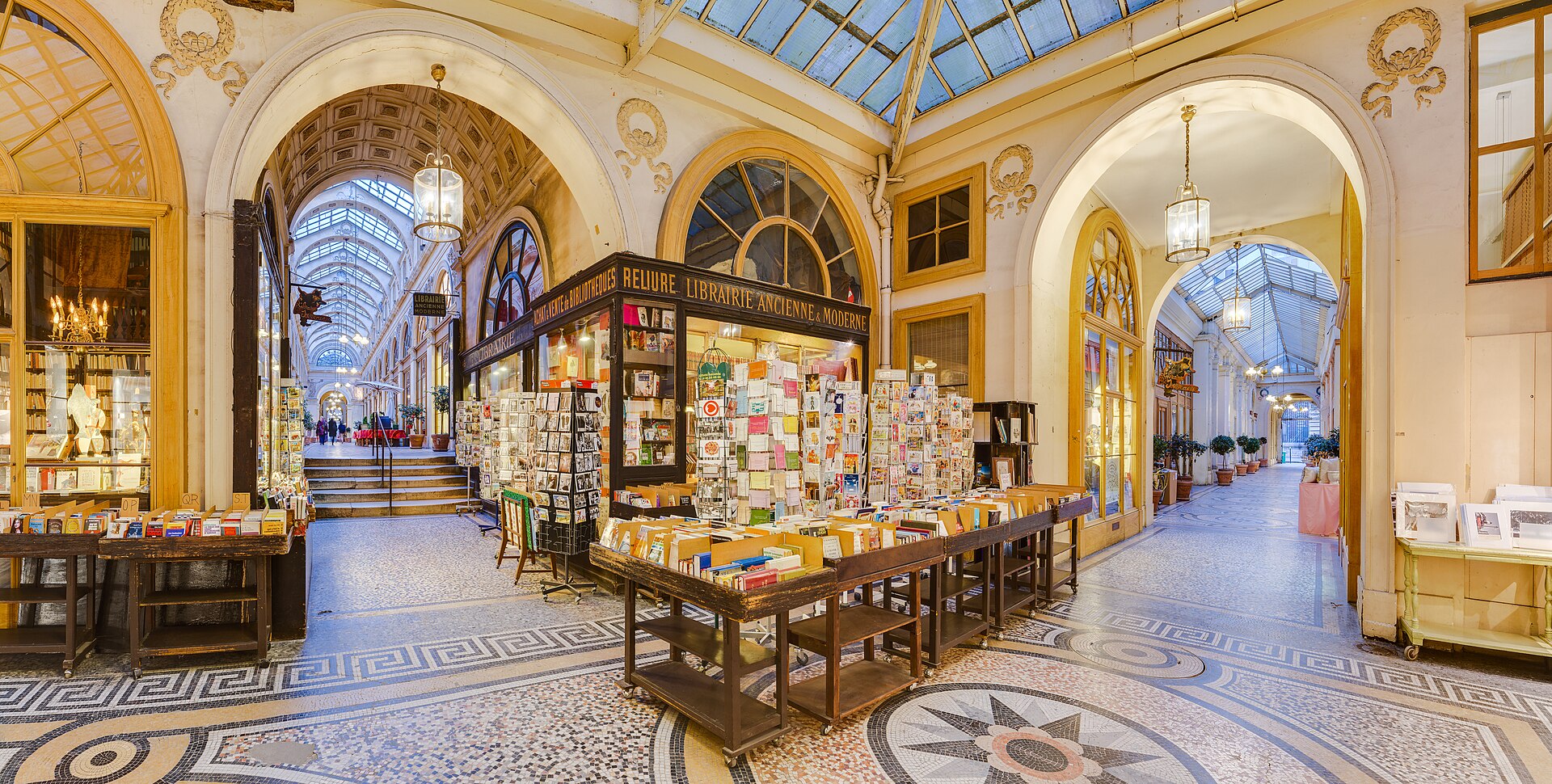
Rain that does not stop. Paris has more indoor hours available than any comparable city, and the trick is knowing where they are before you are standing in the wet. The covered passages of the 2nd arrondissement — Galerie Vivienne, Passage des Panoramas, Passage Jouffroy — form a nearly continuous indoor route from the Palais-Royal to the Grands Boulevards. The department stores have free rooftop terraces. The Sainte-Chapelle windows are better in flat light than in sun.
Something is closed. Renovations, film shoots, presidential motorcades and strikes close things without warning, and museum wings rotate in and out of service constantly. Check the operator’s own website the morning you go, not a third-party listing, and have one alternative in mind for each anchor. If the Centre Pompidou is on your list, check its current status specifically before you build a day around it — it has been in and out of a long renovation programme.
Frequently asked questions
What is the best order to see Paris in?
Geographically, not by fame. Do the Île de la Cité and the Latin Quarter together, the Louvre and Tuileries and Concorde together, the Orsay and Rodin and the Eiffel Tower together, and Montmartre on its own. Fitting the famous things into that shape produces a far better trip than sequencing by how much you want to see each one.
Is three days enough for Paris?
Three days is enough for a genuinely good first visit that covers every headline sight, provided you accept two things: you will not see Versailles, and you will spend ninety minutes in the Louvre rather than a day. Both are fine trades. Four days is where the trip stops feeling tight.
How much walking is in a typical Paris day?
Between 12,000 and 20,000 steps if you follow any of the routes above — eight to fourteen kilometres. Paris pavements are cobbled, uneven and unforgiving, and the Metro has a great many stairs and very few lifts. Bring shoes you have already broken in; our packing list is blunt about this.
Should I buy the Paris Museum Pass?
Only if you are visiting two or more included sights per day for the length of the pass, and only if you would have paid for those sights anyway. At €90 for two days it needs a lot of museum-going to pay back, and it does not cover the Eiffel Tower, which is the most common misunderstanding about it.
Can I do Paris without the Metro?
Mostly, yes, if you stay centrally and are happy walking eight to ten kilometres a day. Almost everything in this guide except Versailles, Montmartre and the day trips is within walking distance of everything else. Buses are the pleasant middle ground — slower than the Metro but you see the city, and line 69 in particular is an accidental sightseeing tour for the price of a ticket.
What should I do on my first evening?
Nothing ambitious. Walk to the river, eat somewhere near your hotel, go to bed. First evenings are jet-lagged, and the classic mistake is booking an expensive dinner you are too tired to enjoy.
Is Paris walkable with children?
The city is walkable but the Metro is not stroller-friendly — most stations have stairs only. Shorter days, more park time and buses instead of the Metro is the answer. See Paris with kids and the stroller guide for the practical version.
How far ahead should I book?
Flights and hotels two to three months out for summer, four to six weeks otherwise. Eiffel Tower summit tickets the day they release, roughly sixty days ahead. Louvre slots two to three weeks ahead. Restaurants one to two weeks. Everything else in the last few days, or on the day.
If a single day is all you have, we have written that one out hour by hour: the perfect 24 hours in Paris, with the island at dawn, the Orsay rather than the Louvre, and the tower at dusk.
Two days is the length most people actually get, and it splits neatly: our complete 48-hour Paris itinerary gives one day to each riverbank, which means almost no Metro and no doubling back.
Three days is the sweet spot for a first visit, and we have written the full three-day plan out day by day — the island, the Louvre, Montmartre and the tower, arranged so no museum falls on the day it is closed.
Four days is the most common length of Paris trip, and the fourth day is a genuine fork in the road. Our 4 days in Paris itinerary lays out both options — Versailles, or a day with no monuments in it at all — and says which we would take.
If you can take five days, take five days. Our 5 days in Paris itinerary makes the case at length: every headline sight, one day trip, and a fifth day that belongs to nobody’s checklist.
A week changes the arithmetic entirely: two day trips become possible without the holiday turning into a rail timetable. Our one week in Paris itinerary gives five days to the city, two to the country around it, and leaves the seventh deliberately empty.
A Friday-to-Sunday break is really two and a half days, and the half changes the plan. Our weekend in Paris itinerary works through it hour by hour, including why Sunday morning is the best few hours of the week here.
An itinerary only survives contact with the city if the practicalities underneath it hold up. Before you lock any of these days in, it is worth an hour with our guide to the practical things to sort before you fly — the museum closing days that will wreck a plan, the 2026 transport fares, the card charge to refuse at every terminal, and the ticket that does not include the Eiffel Tower.
Related Paris Guides
- How many days do you need in Paris? — the trade-offs by traveller type
- How to plan a trip to Paris — budgets, booking windows and documents
- The Paris attractions guide — every headline sight, ranked honestly
- Things to do in Paris — beyond the monuments
- First-time Paris tips — what nobody tells you before your first visit
- The Paris Metro guide — tickets, lines and how not to get caught out
- Where to stay in Paris — neighbourhood by neighbourhood
- Day trips from Paris — ranked by what they cost you in time
- The Paris food guide — how to eat well without overpaying
- Paris on a budget — the city for far less than you think
Photo Credits
Jardin des Tuileries: Grand bassin octogonal Jardin des Tuileries 003 by Moonik, CC BY-SA 3.0, via Wikimedia Commons.
Sainte-Chapelle: Nef De La Sainte Chapelle Paris by Taltyelemna, CC BY-SA 3.0, via Wikimedia Commons.
View from the Sacré-Cœur dome: Nord est paris vu depuis le dome du Sacré Coeur DSC 0239 by Pline, CC BY-SA 3.0, via Wikimedia Commons.
Galerie Vivienne: Galerie Vivienne, 12 March 2015 by Benh LIEU SONG, CC BY-SA 2.0, via Wikimedia Commons.