One Day in Paris: The Perfect 24-Hour Itinerary
One great walk, one building that stops you, one proper meal, and the tower at dusk.
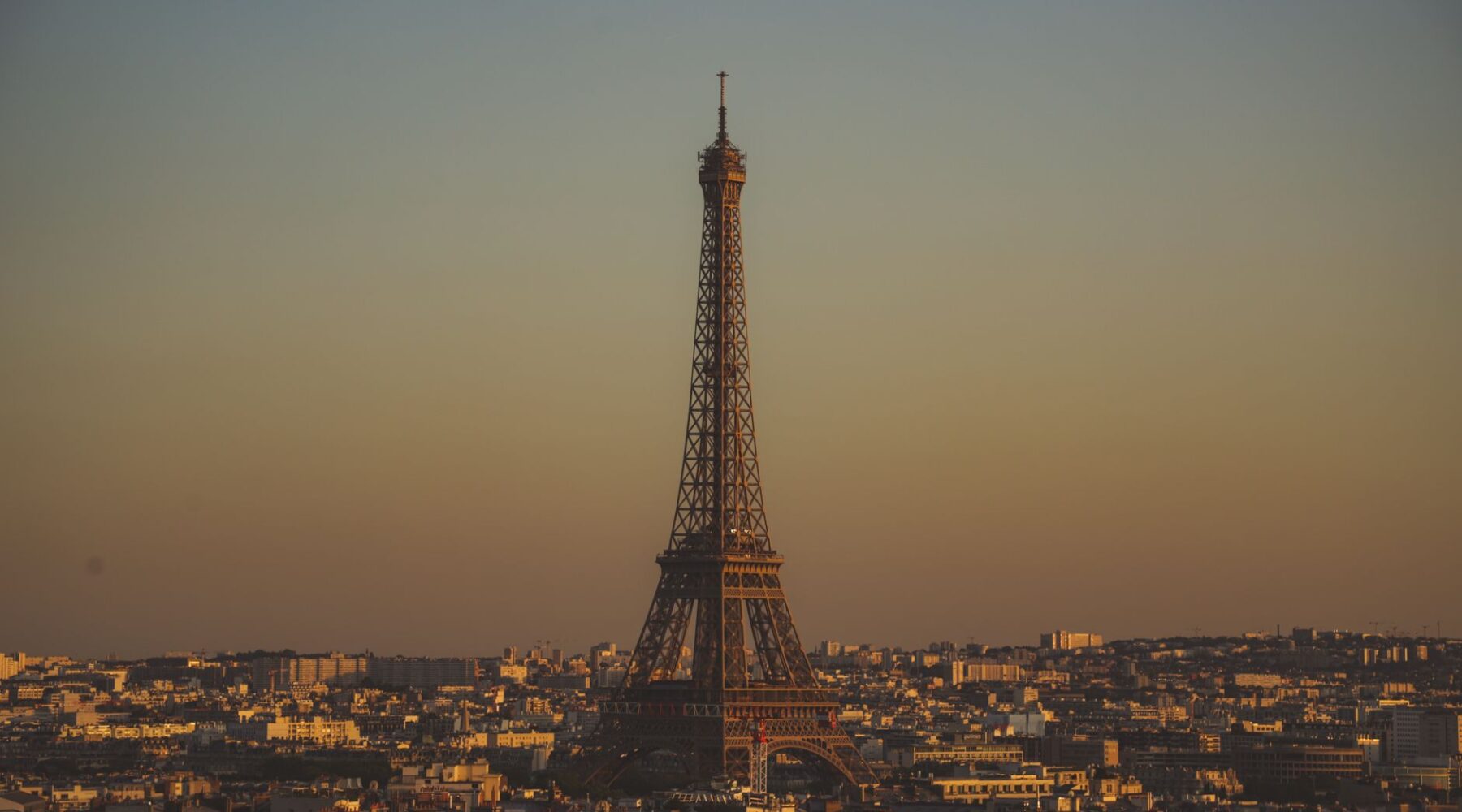
Twenty-four hours is not enough time to see Paris, and pretending otherwise is how people end up spending their single day queueing. What one day in paris can genuinely give you is a coherent slice of the city: one great walk, one building that stops you, one proper meal, and the Eiffel Tower lit up at the end of it. That is a real day. Trying to add the Louvre, Versailles and Montmartre to it is how you get a day of transport with monuments glimpsed through windows.
This is an hour-by-hour plan built for people arriving early and leaving late — Eurostar day-trippers, cruise passengers, anyone with a long layover, anyone passing through. Everything in it is within walking distance of everything else except the two ends. Prices were checked in September 2026 and should be treated as the right order of magnitude; French museum tariffs changed sharply in January 2026 and will change again.

The plan in one glance
| Time | Where | Cost | Why it earns the slot |
|---|---|---|---|
| 08.00 | Coffee and a pastry, standing at a bar | €4–6 | Fast, cheap, and the way the city actually starts |
| 08.30 | Île de la Cité and Notre-Dame | Free | Empty at this hour; unrecognisable by eleven |
| 09.30 | Sainte-Chapelle | ≈€13 | Fifteen minutes, and the best fifteen in Paris |
| 10.30 | Walk the Left Bank quais to Saint-Germain | Free | This is the part people remember |
| 12.30 | Lunch — a two-course formule | €19–28 | Lunch prices are half of dinner prices |
| 14.00 | Musée d’Orsay | ≈€16 | The one museum you can do properly in 90 minutes |
| 16.00 | Walk west along the river to the Eiffel Tower | Free | Forty minutes past Invalides and the Rodin garden |
| 17.00 | Eiffel Tower, second floor | €14.80–23.50 | Daylight and dusk from the same ticket |
| 19.30 | Dinner near Rue Cler or in the Marais | €25–45 | Somewhere you sit down and stop moving |
| 22.00 | The tower sparkling, from a distance | Free | Five minutes on the hour, and better from far away |
Total for the day, excluding food: roughly €30–40 in tickets plus a €12.30 day pass on transport, or less if you walk everything. That is not a cheap day out, but it is a lot of Paris for the money.
Before you start: three decisions to make the night before
Book Sainte-Chapelle and the Eiffel Tower
These are the only two things in the day that can genuinely be sold out, and both are bookable online. Sainte-Chapelle takes a timed slot and the morning ones go first on sunny days; the Eiffel Tower releases tickets roughly sixty days ahead, and if you want the summit rather than the second floor in high summer you will need to have booked weeks ago. Everything else on this list you can walk into.
Decide whether you are buying a transport pass
A Navigo Jour day pass costs €12.30 and covers unlimited travel in central Paris, which pays back at about five journeys. On this itinerary you might make three. If you are arriving and leaving through an airport, note the €14 airport flat fare is a separate ticket that the day pass does not replace. Our guide to Paris tickets and passes lays out which combination works for which kind of day, and the Metro guide covers actually using the thing.
Work out your first and last hour
If you are arriving by Eurostar, Gare du Nord puts you fifteen minutes from the Île de la Cité on Line 4 — see our Eurostar guide for the arrival logistics. From Charles de Gaulle, the RER B on the €14 flat fare takes about 35 minutes to Saint-Michel; from Orly, Orlyval and the RER B combine on the same fare. The airport transfer guide compares them properly. Build in more slack at the end than you think you need: Paris transport is reliable until it suddenly is not.
Morning: the island, and the light on the river
08.00 — Coffee, standing up
Go into any café with a zinc counter and order un café and a croissant. Standing at the bar it will cost €4 to €6; sitting at a table on the terrace, closer to €10. This is not a scam, it is the published two-tier pricing every French café runs, and knowing it saves you money every morning of every trip you ever take here.
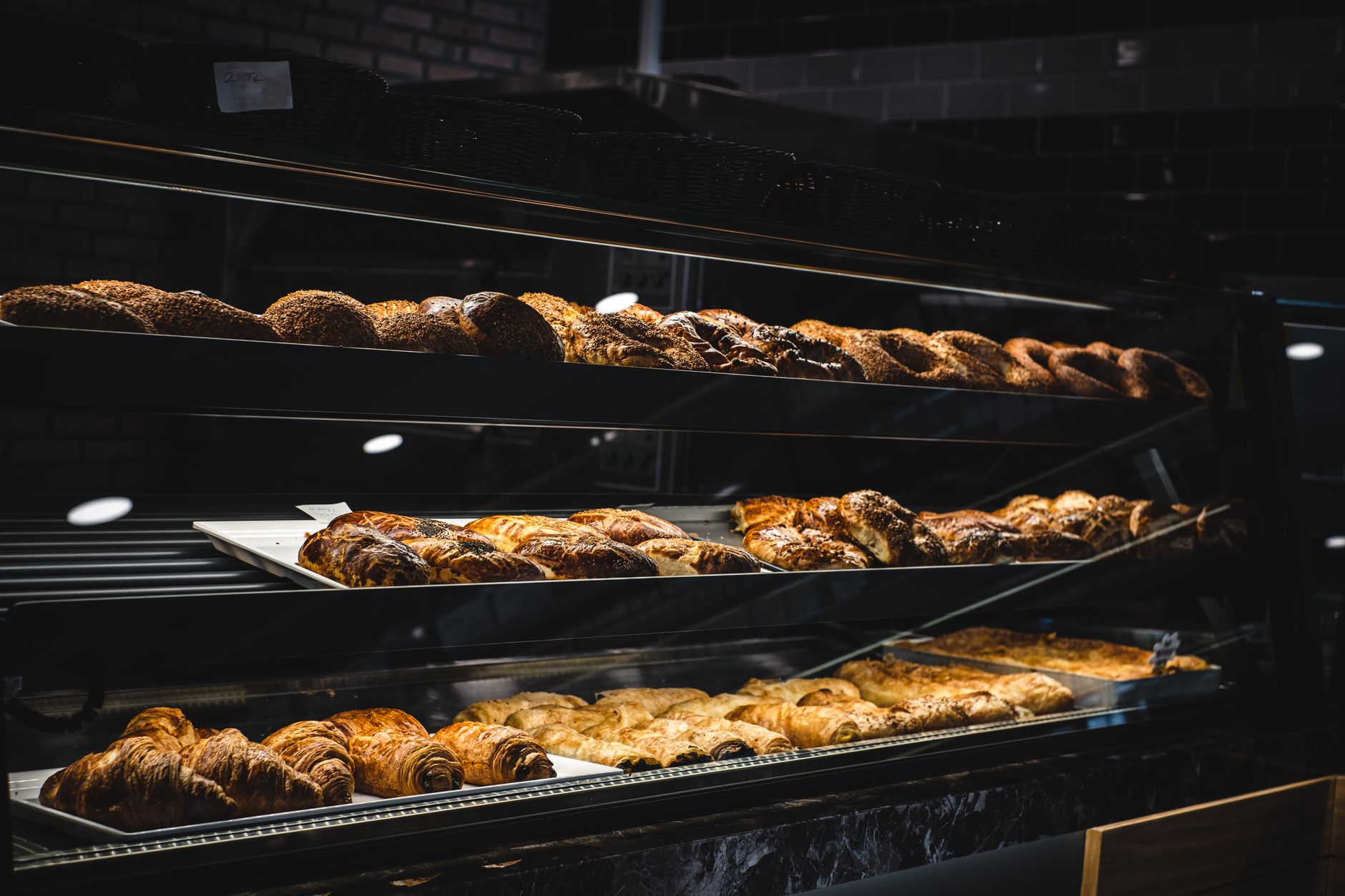
If you want the pastry to be genuinely good rather than merely present, buy it at a boulangerie rather than the café — our guide to the best bakeries in Paris has the ones worth a detour, though on a one-day trip the nearest decent one wins.
08.30 — Île de la Cité
The island where Paris began is roughly 300 metres of walking end to end and holds two of the great buildings in Europe. At half past eight it is almost empty; by eleven the forecourt of Notre-Dame is a solid block of people.
The cathedral reopened in December 2024 after the fire and the restoration, and entry is free. The queue moves quickly early and slowly later. The towers are a separate paid ticket with their own booking and their own queue, and on a single day in Paris they are not worth it — you are going up the Eiffel Tower this evening, and the view from the towers is the same city seen from lower down.
Walk west along the island afterwards. Past the Conciergerie you reach Place Dauphine, a quiet triangular square of plane trees and shuttered restaurants that a remarkable number of visitors never find, and beyond it the Square du Vert-Galant at the very tip, a small pointed park at water level under the Pont Neuf. Ten minutes there is the closest thing to a free luxury the city offers.
09.30 — Sainte-Chapelle
Then go back east and up the stairs into Sainte-Chapelle. The lower chapel is dim and painted and slightly disappointing, which is the point: the stairs to the upper chapel are deliberately narrow and the room at the top is fifteen metres of stained glass on all four sides with almost no wall between. It was built in the 1240s to hold what Louis IX believed was the Crown of Thorns, and it still works exactly as intended.
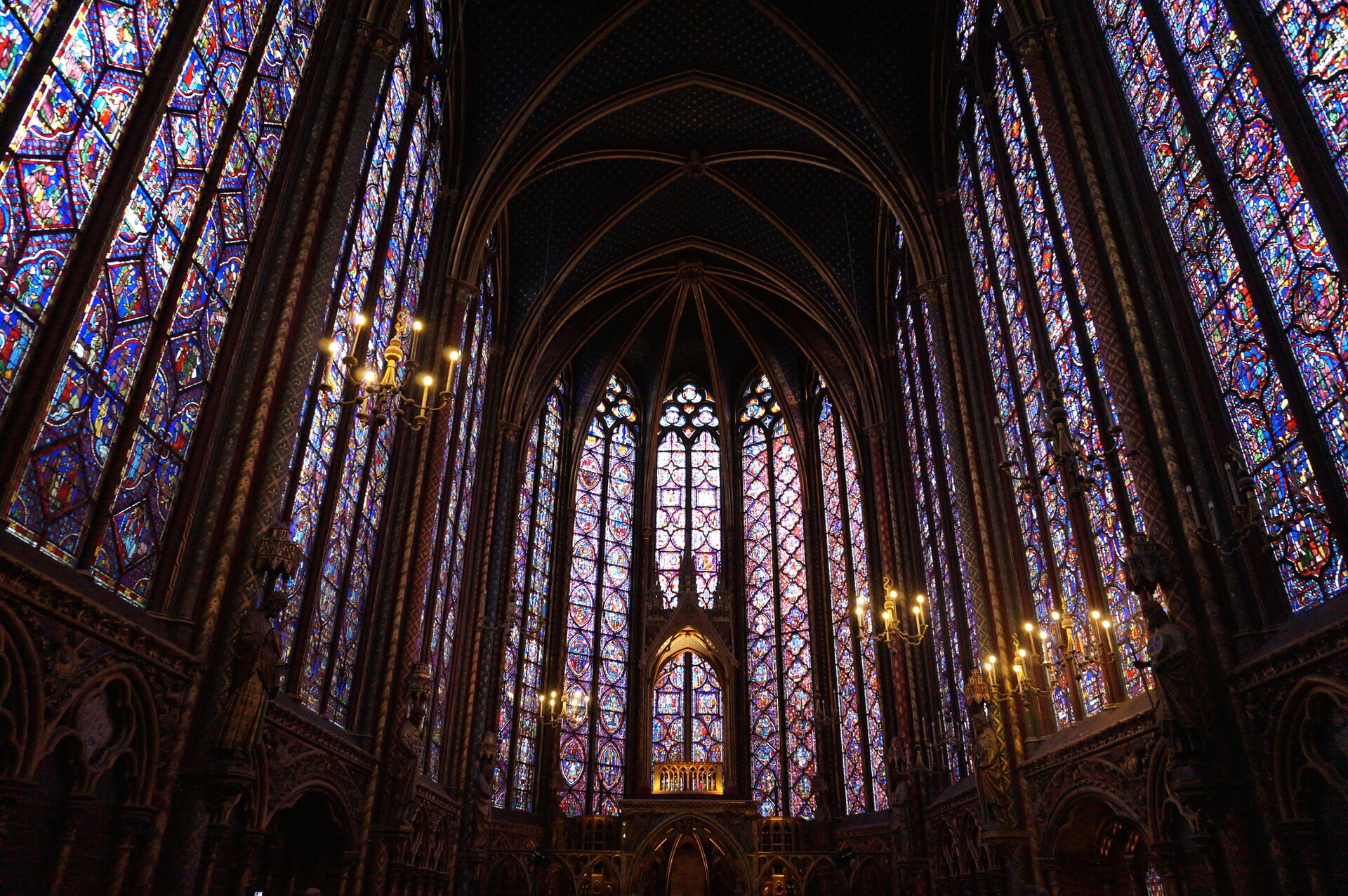
Fifteen to twenty minutes is a complete visit. Do not feel you need to stay longer. Bright overcast light is arguably better than direct sun, which blows out the south windows.
Midday: the walk that makes the day
10.30 — The Left Bank quais
Cross to the Left Bank and walk west with the river on your right. This stretch — past the bouquinistes with their green boxes of second-hand books and vintage posters, along the Quai des Grands-Augustins, into Saint-Germain — is the single best hour of unstructured walking in central Paris, and it is free.
Detour inland whenever something looks interesting. Rue de Buci and Rue de Seine have the market stalls and the cafés; the streets around Saint-Sulpice have the good shops. If you have half an hour spare, the Latin Quarter is immediately east and the Jardin du Luxembourg is ten minutes south, and the Luxembourg is where you should go if the weather is doing anything at all pleasant. Our walking guide maps the routes that connect properly.
12.30 — Lunch, and why it should be your big meal
Eat properly at lunch. The two-course formule at a decent neighbourhood bistro runs €19 to €28 in most of central Paris, and the same kitchen will charge you €40 to €50 for a comparable dinner. On a one-day trip that is a straight upgrade: you get the better meal at the lower price and you are not trying to find a table at nine in the evening in a city you do not know.
Avoid anywhere with photographs of the food outside, a menu in six languages, or a man on the pavement inviting you in. Those three signals together are almost perfectly reliable. Our food guide explains what to look for instead, and the cheap eats guide covers the €12 version if the budget is tighter.
The alternative, and a genuinely good one on a warm day, is a picnic: bread from a bakery, cheese from a fromagerie, fruit from a market stall, eaten on the grass at the Luxembourg or on the quai. Total cost around €10 and it puts you outdoors, which on a single day in Paris is worth something.
Afternoon: one museum, done properly
14.00 — Musée d’Orsay
The Musée d’Orsay is the right museum for a one-day trip and the Louvre is the wrong one. This is not a close call. The Orsay is a converted Beaux-Arts railway station with a single vast hall, a clear chronology and a fifth floor that holds one of the best collections of Impressionist painting anywhere. You can see it properly in ninety minutes. The Louvre cannot be seen properly in a day, let alone in the two hours you would have, and a rushed Louvre visit is a bad experience — a long walk to a crowded room to look at the Mona Lisa over other people’s phones.
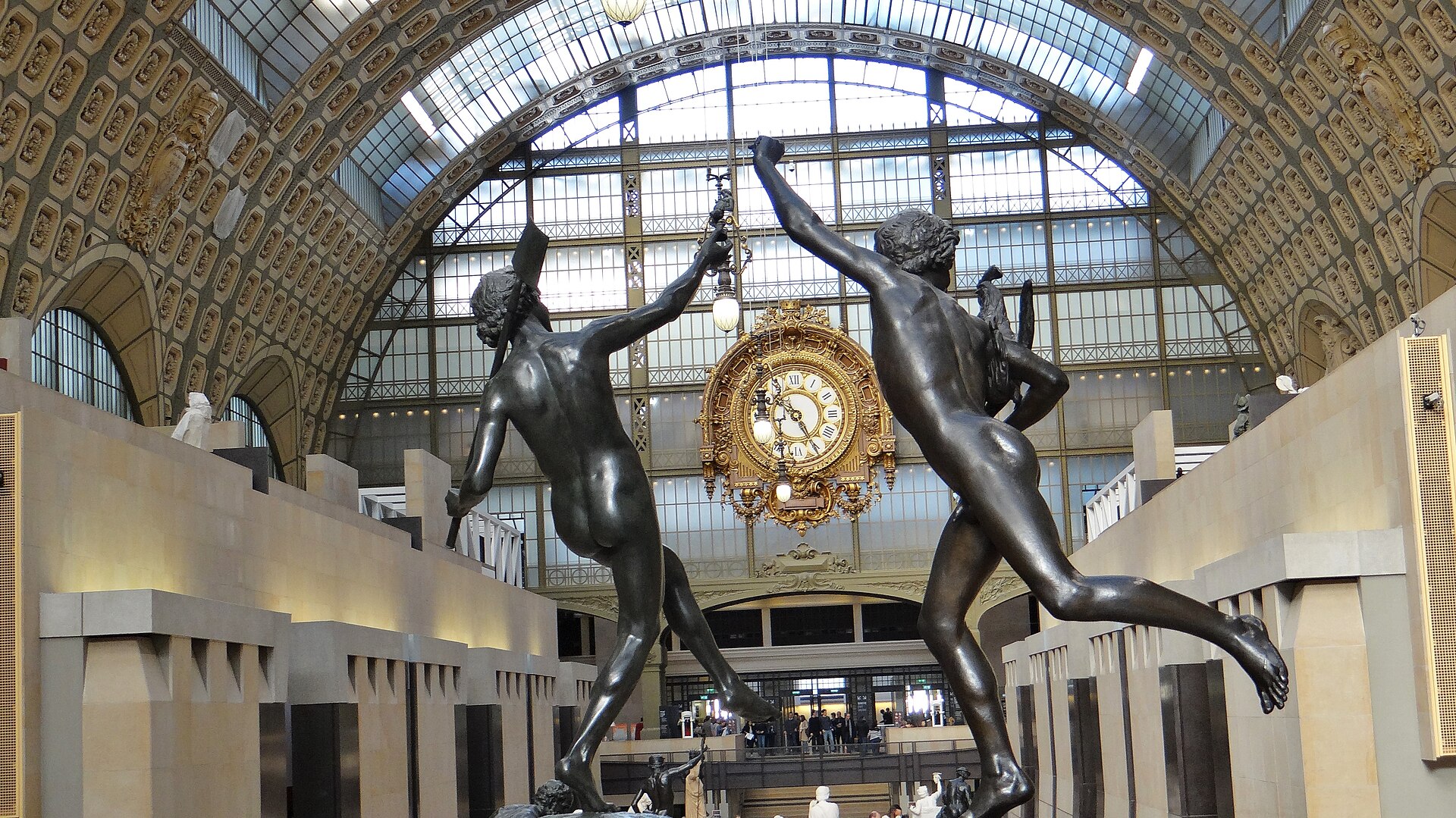
Go up to the fifth floor first, before the tour groups arrive from the Louvre in the mid-afternoon. Monet, Renoir, Degas, Van Gogh, Cézanne, and the famous clock face you can look out through. Then work down through the sculpture in the main hall on your way out. The Orsay closes on Mondays, which matters if your one day happens to be a Monday — in which case swap in the Musée de l’Orangerie, ten minutes away in the Tuileries, whose two oval rooms of Monet water lilies take forty minutes and are close to perfect. See the Orangerie guide for how it works.
16.00 — The walk west
From the Orsay it is roughly forty minutes on foot to the Eiffel Tower along the river, past the gold dome of Les Invalides and the gardens of the Musée Rodin. If you are tired, RER C from Musée d’Orsay to Champ de Mars–Tour Eiffel takes six minutes. If you are not, walk: the tower grows in front of you the whole way and the approach across the Pont d’Iéna is one of the great arrivals in any city.
Evening: the tower, and then the tower from a distance
17.00 — Going up
The Eiffel Tower has three ticket levels and the middle one is the right answer for most people.
- Stairs to the second floor, €14.80. Around 670 steps, a queue that is usually a fraction of the lift queue, and the same view you would pay €23.50 for. Genuinely the best-value ticket at the tower if your knees are willing.
- Lift to the second floor, €23.50. The second floor is the better viewing level of the two. You are high enough to see the shape of the city and low enough to identify individual streets and buildings.
- Lift to the summit, €36.70. A second queue at altitude for a view in which everything has become too small to recognise. It sells out six to eight weeks ahead in summer. On a single day in Paris, skip it.
Book a slot around an hour before sunset and you get the city in daylight, the light going gold, and the lamps coming on, all from one ticket. That is the single best-value hour of the day.
19.30 — Dinner
Two sensible options. Stay in the 7th and eat around Rue Cler, which is touristy but pleasantly so and saves you a journey. Or take Line 8 or 9 across to the Marais, which has the densest concentration of good small restaurants in central Paris and, unusually for the city, a lot of places that open on Sundays and Mondays.
Book if you can, even a few hours ahead. Walking into a good Paris restaurant at half past eight without a reservation is a hopeful act rather than a plan.
22.00 — The last five minutes
The Eiffel Tower’s lights flicker for five minutes on the hour, every hour, after dark. It is much better seen from a distance than from underneath. The Trocadéro terrace across the river is the classic viewpoint and will be crowded; the Pont de Bir-Hakeim, the steps at Avenue de Camoëns, or simply the middle of the Pont Alexandre III looking west all work and are quieter. Our sunset spots guide and the photo spots guide have more of them.
Variations on the day
If you must see the Louvre
Some people are not going to be talked out of it, which is fair. If the Louvre is non-negotiable, restructure: book the 9am slot, give it two hours and no more, pick one wing (Denon for the Italian paintings and the Mona Lisa, Sully for the Egyptian collection, Richelieu for the French sculpture courts), and drop the Orsay entirely. Then the afternoon becomes the river walk and the tower, and the morning island section moves to the early evening, when Notre-Dame and Sainte-Chapelle are shut but the Île de la Cité is lovely to walk anyway.
If it rains all day
Swap the outdoor walking for the covered passages of the 2nd arrondissement — Galerie Vivienne, Passage des Panoramas, Passage Jouffroy — which chain together into an almost continuous indoor route. Add a second museum in place of the river walk. The Eiffel Tower in rain is not worth the ticket; substitute the top floor of a department store, where the rooftop terraces are free. Our rainy day guide has the full list.
If you are here with children
Halve it. One museum becomes forty minutes, the walk becomes a boat, and lunch becomes a picnic in a park with a playground. The Batobus river shuttle is more useful than the Metro for a family day because everyone stays seated and can see out. See Paris with kids for the version that actually works.
If you are on a layover
You need at least six hours between landing and boarding before leaving the airport makes sense, and eight to do anything like this itinerary. Cut it to the island, the Left Bank walk and one sit-down meal, and go back early. Store your bags at the station rather than dragging them around.
The alternative: a Right Bank day
If you have done the Left Bank before, or you simply want a day with more shops and cafés and fewer churches, the mirror-image route works just as well and uses the same walking logic.
Start at the covered markets and arcades rather than on the island. Coffee near the Palais-Royal, then ten minutes in its courtyard and gardens, which are free, arcaded and almost empty in the morning. Walk north into the Galerie Vivienne and the Passage des Panoramas, a chain of nineteenth-century glass-roofed shopping arcades that are still full of stamp dealers, bookbinders and old restaurants. Come out on the Grands Boulevards and cut east to the Marais.
Give the middle of the day to the Marais on foot: the Place des Vosges, which is the oldest planned square in the city and the best place in central Paris to sit on grass; the narrow streets of the Jewish quarter around Rue des Rosiers, where the falafel queue is a genuine local institution rather than a tourist trap; and the small museums, of which the Musée Carnavalet — the history of Paris, free to enter for the permanent collection — is the one to pick if you only do one.
Then walk west along Rue de Rivoli to the Louvre and the Tuileries, take a green chair by the basin for twenty minutes, and continue through the Place de la Concorde. From there you can either climb the Arc de Triomphe for the view that includes the Eiffel Tower, or drop south across the Pont Alexandre III and rejoin the main itinerary at the tower. The shopping streets guide and the neighbourhoods guide both help if you want to reshape the middle of this route around what interests you.
The Right Bank version is flatter, has better shopping and better coffee, and misses the two great Gothic interiors. Which of those trade-offs you prefer is a matter of taste rather than a matter of getting it right.
What to skip on a one-day trip
- Versailles. Four hours minimum with travel, and that is half your day for one palace. Save it for a longer visit.
- Montmartre. Beautiful, and 45 minutes of travel round trip from the centre plus a hill. It does not fit.
- The hop-on hop-off bus. Central Paris traffic makes it slower than walking on the very route you would want it for.
- The Paris Museum Pass. At €90 for two days it cannot possibly pay back in one, and it does not include the Eiffel Tower anyway. Our pass analysis explains when it does make sense.
- Dinner cruises. A mediocre set menu at a high price, eaten under glass. A €17 sightseeing cruise and a proper dinner on land costs less and is better at both jobs — the cruise guide compares the operators.
- The Eiffel Tower summit. Worth saying twice. The second floor is the better view.
Frequently asked questions
Is one day in Paris worth it?
Yes, if you accept what it is. A single day gives you a real, specific impression of the city rather than a survey of it, and that is a genuinely good thing to have. It is not worth it if you spend the whole day trying to see everything, because then you see nothing properly and remember only the queues.
How much does one day in Paris cost?
Roughly €80 to €120 per person all in: €30–40 in entry tickets, €12.30 for a transport day pass if you use one, €25–35 for a good lunch, €30–45 for dinner. You can do it for around €45 by walking everywhere, picnicking at lunch, taking the stairs at the Eiffel Tower and skipping the Orsay for the free churches and parks.
What is the best area to base a one-day trip?
The Île de la Cité and Saint-Germain, because everything on this route runs through them. If you are staying overnight either side, the 5th, 6th or 1st arrondissements put you inside the itinerary rather than commuting into it.
Can you see the Eiffel Tower and the Louvre in one day?
Physically yes; enjoyably, only if you treat the Louvre as a two-hour visit with a single target and give up the Orsay and the leisurely river walk. Most people who try to do both end up rushing the museum and arriving at the tower too tired to like it.
How much walking is involved?
About eight to ten kilometres, or 12,000 to 16,000 steps, if you follow the route as written. Paris pavements are cobbled and uneven and the Metro is full of stairs. Wear shoes you have already broken in.
Is one day enough to get a feel for Paris?
For a feel, yes. For the city, no — and the honest answer is that most people who spend one day here come back. If you have the option of two, our master itinerary guide shows what the second day adds, and it is a lot.
What if my one day is a Monday or a Tuesday?
On a Monday the Orsay is closed; substitute the Orangerie or the Louvre. On a Tuesday the Louvre and the Orangerie are closed but the Orsay is open, so the route above works as written. Notre-Dame, Sainte-Chapelle and the Eiffel Tower are open every day.
If you can stretch the trip to a second day, the shape changes completely. Our 2 days in Paris itinerary splits the city by riverbank and adds the Louvre, the Marais and an evening at the tower without any of the rush.
Related Paris Guides
- The complete Paris itinerary guide — day-by-day plans for one to ten days
- How many days do you need in Paris? — what each extra day buys you
- The Eiffel Tower guide — every ticket level compared honestly
- Musée d’Orsay guide — what to see if you only have ninety minutes
- The Paris Metro guide — tickets, lines and etiquette
- The Paris food guide — how to eat well without overpaying
- Free things to do in Paris — for the version of this day that costs nothing
- First-time Paris tips — the things nobody warns you about
Photo Credits
Pont Neuf and the Île de la Cité: Paris, Pont Neuf — 2014 — 1412-6 by Dietmar Rabich, CC BY-SA 4.0, via Wikimedia Commons.
Sainte-Chapelle: Nef De La Sainte Chapelle Paris by Taltyelemna, CC BY-SA 3.0, via Wikimedia Commons.
Musée d’Orsay: Grande galerie du Musée d’Orsay (1) by Ibex73, CC BY-SA 4.0, via Wikimedia Commons.