Paris Solo: The Best Things to Do in Paris on Your Own
Paris grants solitude a kind of official status. Here is how to spend it.
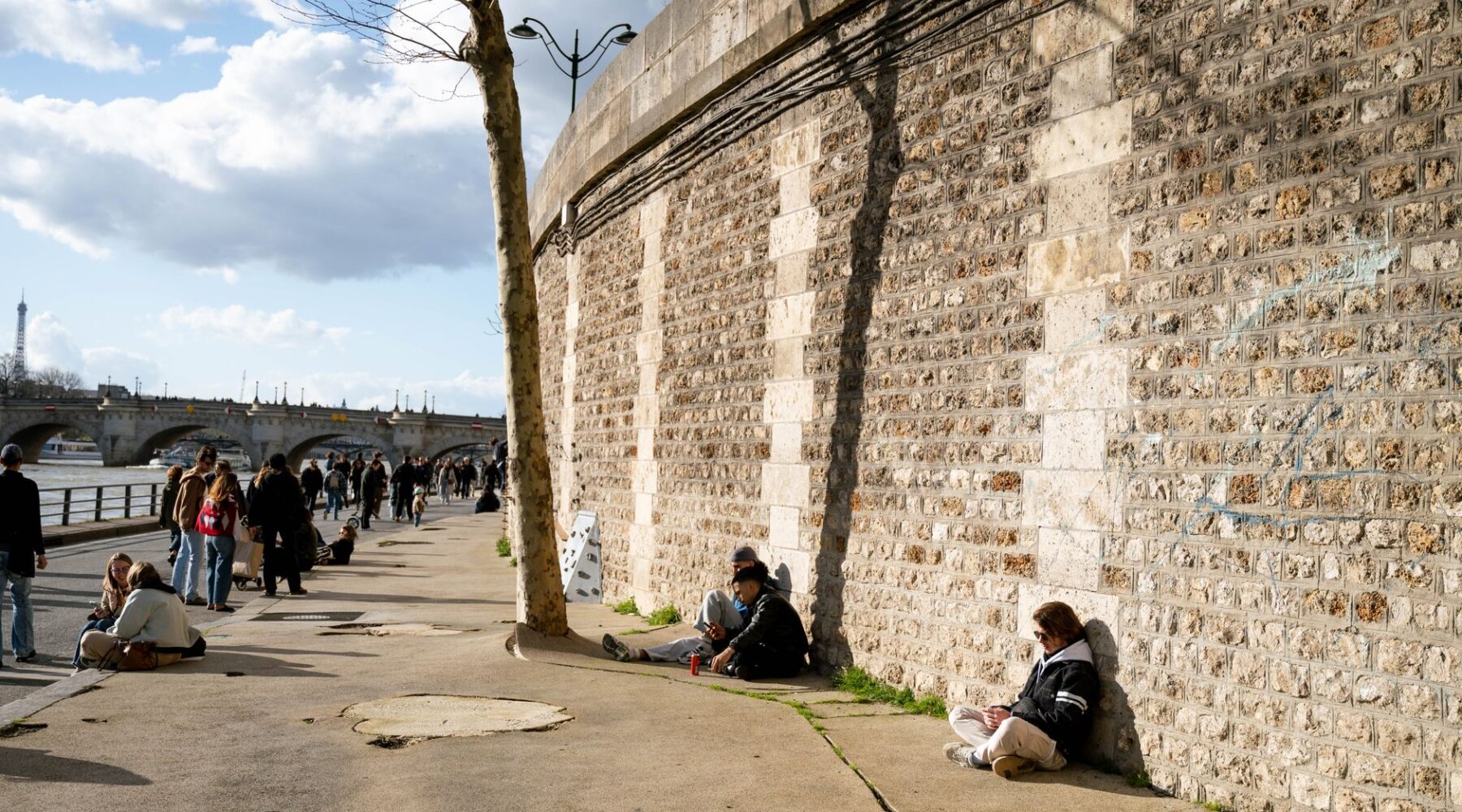
There is a bench on the upper terrace of the Jardin du Luxembourg, facing the pond, where on any weekday morning you will find four or five people sitting entirely alone, doing nothing in particular, for an hour or more. Nobody is waiting for anybody. Nobody looks stranded. Paris grants solitude a kind of official status that most cities do not, and once you notice it, the whole business of travelling here by yourself stops feeling like a compromise. The internet’s phrasing for this — solo travel paris things to do alone — is clumsy, but the question underneath it is real, and this guide is the answer.
What follows is not a safety briefing; if that is what you are after, our companion guide to solo travel in Paris as a woman covers the areas, the night transport and the practical precautions in detail. This one is about what to actually do with the days: the museums that reward a single visitor, the walks worth taking slowly, the meals that work for one, the evenings, the day trips, and the handful of famous Paris experiences that are genuinely worse alone and can be skipped without regret. Prices were checked in September 2026; treat them as the right order of magnitude.
What works alone, at a glance
| What | Why it works alone | Cost | Time |
|---|---|---|---|
| The smaller museums | You set the pace; nobody is waiting at the exit | €8–14, several free | 1½–2 hours each |
| Walking the quays and the covered passages | Free, endlessly divertible, better without negotiation | Free | 2–4 hours |
| Lunch at a bistro counter | Set-price formule, rooms full of people eating alone | €18–26 | 1 hour |
| A cinema showing films in the original language | Nobody talks; going alone is the norm here | €8–13 | 2 hours |
| Jazz cellar or a church concert | You face the stage, not each other | €12–30 | An evening |
| A cooking class or food tour | Instant company with no obligation afterwards | €75–160 | 3–4 hours |
| Day trip by train | Fixed structure, no one else’s timetable | €10–60 return | A day |
Museums, which is where solo travel actually wins
The single greatest advantage of visiting a museum alone is that you owe nobody an explanation for standing in front of one painting for twenty minutes, or for leaving after forty. Paris has more museums than anyone can see and the discipline of choosing is easier without a committee.
The big ones, and an honest verdict
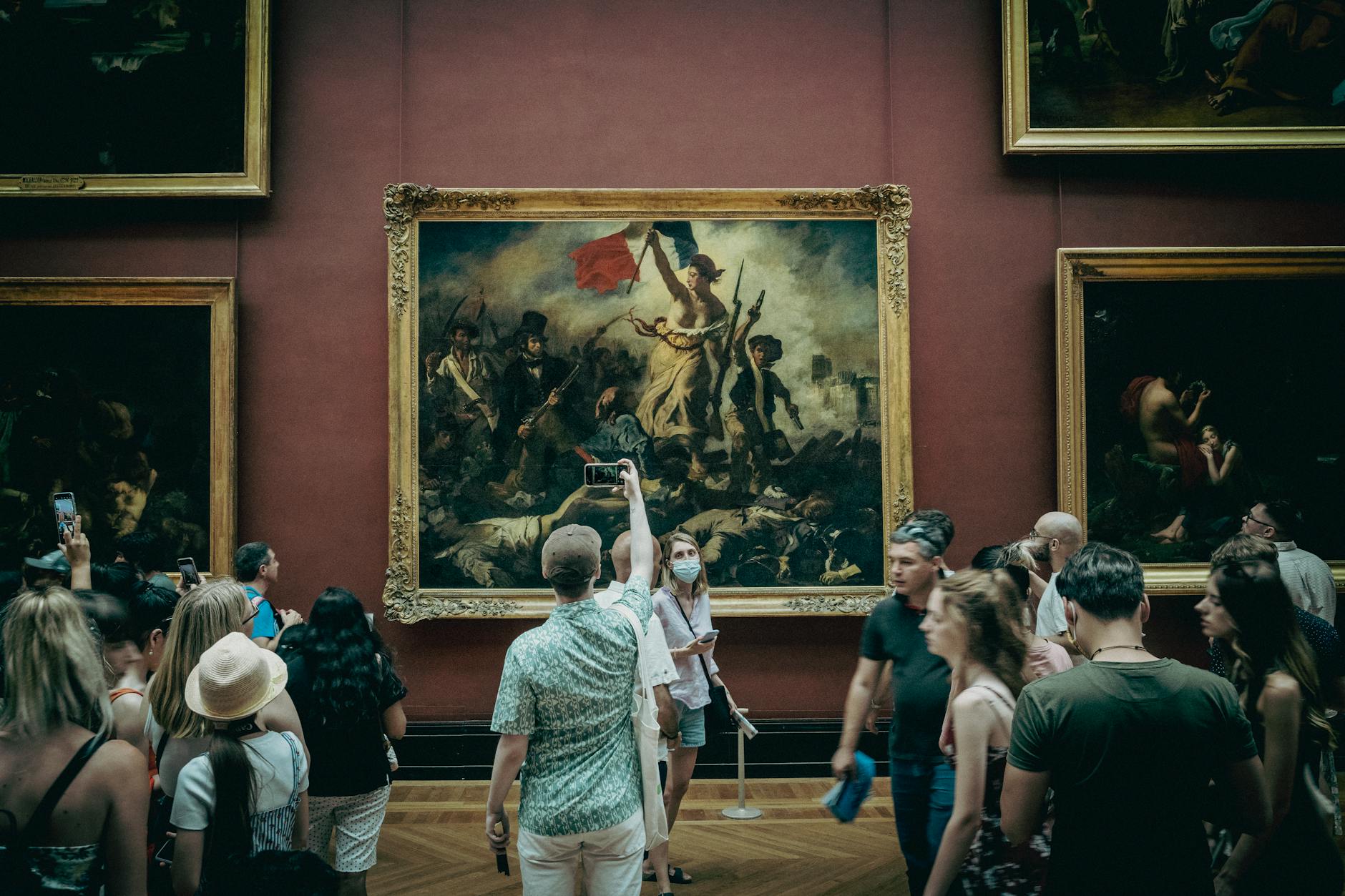
The Louvre is worth doing alone, provided you accept that you are not going to see it. Pick two wings, book the first slot of the day, and treat the Mona Lisa room as optional — it is a crush of raised phones and the picture is small and behind glass, and every solo visitor I have ever spoken to about it has said the same thing afterwards, which is that the Vermeers two rooms away were the better twenty minutes. Note that ticketing is now two-tier: €22 for EEA visitors and €32 for everyone else. Our Louvre guide covers the quieter entrances and how to build a route.
The Musée d’Orsay is the better building and the more manageable collection, and the top-floor Impressionist rooms behind the clock face are the best hour of art in the city. It is closed on Mondays. The Orangerie takes ninety minutes, holds Monet’s water lily rooms, and is the museum most improved by going alone — those two oval rooms are designed for contemplation and are ruined by conversation.
The small ones, which are the real answer
If you have three or four days, spend at least two afternoons in the small museums. They are quiet, cheap, rarely queued, and they are where solo travellers in Paris consistently report having their best time. Our guide to the small museums of Paris goes through them properly; the shortlist worth memorising is the Musée Rodin and its garden, the Musée de la Vie Romantique with its courtyard tea room, the Musée Jacquemart-André, the Musée Nissim de Camondo, and the Musée Marmottan Monet out in the 16th.
One genuinely useful fact: the permanent collections of the City of Paris museums — the Carnavalet, the Petit Palais, the Musée d’Art Moderne, the Maison de Balzac — are free, all year, to everyone. Our roundup of the free museums of Paris has the full list, and on a solo budget they change what a week costs.
Walking, which is the other thing solo travel wins at
Walking is the best thing to do in Paris and it is measurably better alone, because the whole point is to be diverted — down a passage, into a church, along a street you had not planned on. With company that becomes a negotiation. Alone it is just what happens next.
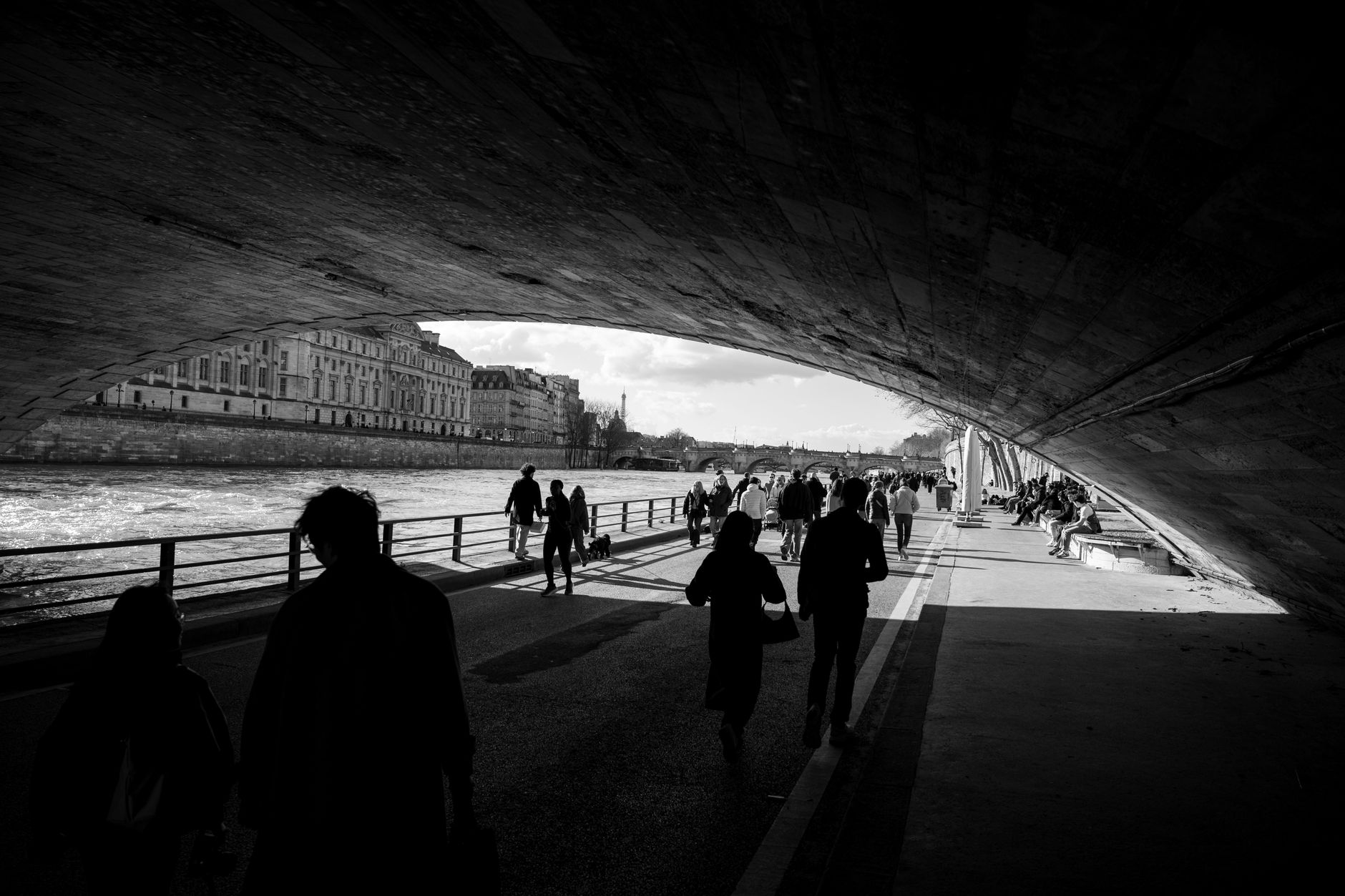
- The lower quays, Pont de Sully to Pont Alexandre III. Down at water level, away from the traffic, roughly ninety minutes at a slow pace with the Île de la Cité on one side of you for much of it.
- The covered passages of the 2nd. Galerie Vivienne, Passage des Panoramas, Passage Jouffroy — nineteenth-century glass-roofed arcades full of odd shops, and the best possible use of a wet afternoon. Our guide to what to do in Paris when it rains builds a whole route out of them.
- Canal Saint-Martin to Parc de la Villette. Iron footbridges, locks that still work, and a completely different city from the postcard one.
- The Coulée verte René-Dumont. A planted walkway on a disused viaduct running east from Bastille, four and a half kilometres above the streets, and still surprisingly unvisited.
- Montmartre before nine in the morning. The same streets that are unbearable at three in the afternoon are close to empty at eight, and our Montmartre guide has the back routes that avoid the funicular queue entirely.
Our walking guide maps several of these properly, and the free walking tours are the easiest low-commitment way to start a trip — two hours, a bit of orientation, and usually three or four other people travelling alone.
Eating alone, planned properly
Eating is where solo travellers get defensive and start buying supermarket sandwiches, which is a waste of Paris. The trick is to choose formats built for one rather than trying to do a two-person dinner by yourself.
- Lunch is the meal to spend on. The formule — two courses, sometimes three, at a fixed price of roughly €18–26 — exists in almost every neighbourhood bistro, and lunchtime rooms are full of people eating alone. You will get food that would cost half again as much at dinner.
- Sit at the counter. Wine bars, oyster bars and the zinc comptoir of an old café are designed for single drinkers and single eaters. Our wine bar guide lists the ones where a solo seat is guaranteed.
- Food halls and markets. The Marché des Enfants Rouges in the Marais, the Marché d’Aligre, the covered halls listed in our markets guide — you buy from three stalls and sit at a communal table, which removes the question entirely.
- Build a picnic. Bakery, fromagerie, a bottle, and the Luxembourg or the Seine steps. It is not a fallback; on a warm evening it is better than most restaurants, and our list of the best bakeries in Paris is where to start.
- Book early for dinner. A 19:30 table alone is easy and often gets you the window. A 21:00 table alone is a slightly stiffer proposition in a full room.
Our restaurant guide and the cheap eats roundup both flag counter seating where it exists.
A day each in three neighbourhoods
The most satisfying way to structure a solo trip is not by monument but by neighbourhood — one district a day, walked slowly, with a museum in the middle and a café at each end.
The Marais
Start at the Marché des Enfants Rouges, walk the Rue des Rosiers, spend the middle of the day in the Musée Carnavalet — free, enormous, and the best account of the city’s own history anywhere — then sit in the Place des Vosges for as long as the weather allows. Vintage shops, falafel, and a bar in the evening where nobody will think twice about you being alone. Our Marais guide has the specifics.
The Latin Quarter and the 5th
The Panthéon and its crypt, the Rue Mouffetard market street, the Arènes de Lutèce, the Grande Mosquée de Paris with its tiled courtyard and mint tea, and the Jardin des Plantes. Bookshops all afternoon. Our Latin Quarter guide and the Panthéon guide cover the paid sights.
Montmartre and the 9th
Uphill early, Sacré-Cœur before the crowds, then down the north side into the streets that still feel residential. The Musée de la Vie Romantique for the afternoon, then the Rue des Martyrs for food. It is the most photographed hill in Europe and it is still worth it at the right hour.
Evenings
The evening is the part of solo travel people find hardest, and Paris has more solutions to it than most cities because so much of its nightlife is spectator-shaped rather than group-shaped.
- Cinema in the original language. Look for VO on the listing — version originale, subtitled in French rather than dubbed. Paris has an extraordinary density of small independent cinemas, particularly in the 5th and 6th, showing everything from new releases to restored classics. Tickets run about €8–13 and going alone is completely unremarkable.
- Jazz cellars. The Left Bank clubs on and around Rue des Lombards and Rue de la Huchette put you at a small table facing a stage, which is the ideal geometry for one. See our jazz clubs guide.
- The opera and the ballet. Both houses release cheap seats, and single tickets are far easier to get than pairs — there is nearly always one seat left in a good part of the house. Our opera guide explains the pricing and which seats have restricted views.
- Church concerts. Sainte-Chapelle, Saint-Germain-des-Prés, the Madeleine and half a dozen others run evening chamber programmes for €20–40. Under that glass in Sainte-Chapelle it is one of the better hours available in Paris at any price.
- A rooftop or a wine bar at the counter. Our guides to rooftop bars and Paris after dark both cover places that work without a group.
Day trips that are better alone
Anything reached by train is straightforward: you go when you want and come back when you have had enough, which is the whole advantage.
- Giverny. Monet’s garden, best in the first hour after opening, and a place where wandering slowly by yourself is precisely the intended use. See the Giverny day trip guide.
- Versailles. Vast, and the gardens and the Trianon estate are the parts worth your afternoon rather than the crush through the state apartments. Two-tier pricing applies here too — a full-estate Passport is €22–32 for EEA visitors and €25–35 for everyone else, depending on the season. Our Versailles guide has the timings that avoid the coach parties.
- Fontainebleau or Chantilly. Both quieter than Versailles, both an hour or less by train, and both easier to enjoy without a group deciding when to leave. See the Fontainebleau guide.
- Auvers-sur-Oise. Van Gogh’s last two months, the wheatfield, the church, the grave. An unusually affecting solo day, and covered in our Auvers day trip guide.
Our full day trips guide ranks them by how far they are and how much of a day they eat.
Parks, and the art of doing nothing in them
An underrated part of solo travel here is that Paris has an unusually generous public attitude to sitting down. The green chairs in the Tuileries and the Luxembourg are free, movable and yours for as long as you want them; the custom is to drag one to wherever the light is and stay. No one will move you on, and no one will assume you are waiting for somebody.
- Jardin du Luxembourg. The best of them: the pond with its toy sailing boats, the Medici Fountain in its green tunnel of plane trees, orchards at the southern end, and enough chairs that you will always find one.
- Jardin des Plantes. Botanical gardens, an alpine garden, and a natural history museum whose Grande Galerie de l’Évolution is one of the strangest and best rooms in Paris.
- Parc des Buttes-Chaumont. Steep, wooded and full of Parisians rather than visitors, with a folly on a cliff and a view over the north of the city.
- Père Lachaise. Not a park, but the effect is similar: a wooded hillside of extraordinary monuments where walking slowly and alone is entirely the point. Go on a bright weekday morning.
- Place des Vosges. Small, arcaded, symmetrical, and the best place in the Marais to sit on the grass with something from a bakery.
The practicalities of being one person
A handful of small frictions come with travelling alone, and all of them have solutions.
- Single tickets are easier, not harder. Sold-out shows, the opera, popular restaurants — there is very often exactly one seat left, and you are the person who can take it. Check availability the same morning rather than assuming.
- The single supplement is real, and it is the only one. A room costs the same for one as for two. Hostels with private rooms, small independent hotels and studio rentals close most of that gap; our apartment versus hotel comparison works through when each makes sense.
- Luggage on arrival and departure day. With nobody to watch a bag while you queue, left-luggage becomes essential. The mainline stations have lockers and there are staffed drop-off points across the centre; budget €6–12 for a day.
- Charging. Alone you use your phone for everything — tickets, maps, translation, photographs, the reservation confirmation. A power bank is not optional.
- Ordering for one. Portions in French bistros are sized for a person, not for sharing, so ordering a starter and a main is normal rather than greedy. Cheese instead of dessert is the local move.
What to skip when you are alone
An honest section, because most solo travel guides pretend everything works equally well.
- The dinner cruise on the Seine. A fixed menu at a table for two on a boat designed for couples and coach groups. The ordinary hour-long sightseeing cruise is far better value and works fine alone — see our Seine cruise comparison — but the dinner version is an expensive way to feel conspicuous.
- The big cabarets. The Moulin Rouge and its rivals seat you at a shared table with a bottle of champagne priced for two. It is a group format. Our cabaret comparison is honest about which shows are worth it at all.
- Disneyland Paris. Perfectly possible, and the queues move faster for singles, but it is a day built around shared reaction.
- The tourist-menu restaurants around the Champs-Élysées and the Latin Quarter’s Rue de la Huchette. Bad value in any configuration, and worse when there is no one to laugh about it with. Eat one street back.
- Ticking off every monument. The temptation when alone is to fill the time. Three things a day is plenty and the fourth is usually the one you resent.
Meeting people, if and when you want to
Paris is sociable but not spontaneous. Strangers at the next café table will not start a conversation, and this is not coldness — it is a boundary that also protects you when you want to be left alone. Company, when you want it, comes from structure rather than chance.
- Cooking classes. Three hours, a shared task, a meal at the end. Our cooking class guide covers the ones that take individual bookings.
- Food and wine tours. Small groups, a guide who does the social work for you. See the food tours guide.
- Hostels with bars, several of which are open to non-residents — see our hostels roundup.
- Language exchange evenings, free and weekly in bars across the 10th and 11th.
Three days alone in Paris
| Day | Morning | Afternoon | Evening |
|---|---|---|---|
| 1 | Free walking tour, then the Île de la Cité and Sainte-Chapelle | Latin Quarter, Rue Mouffetard, the Panthéon | Counter seat at a wine bar, then a VO cinema |
| 2 | Musée d’Orsay from opening | Walk the lower quays to the Marais; Carnavalet, free | Dinner at 19:30, then a jazz cellar |
| 3 | Montmartre before nine | Musée de la Vie Romantique, then Rue des Martyrs | Picnic on the Canal Saint-Martin |
If you have longer, add a day trip on day four and an afternoon of small museums on day five. Our three-day itinerary and the wider day-by-day itinerary planner can be followed solo without adjustment.
What a solo trip costs
Only accommodation carries a real single premium; everything else in Paris is priced per head. Figures checked September 2026.
| Item | Budget | Mid-range |
|---|---|---|
| Bed | €40–60 dorm or small private | €130–200 hotel |
| Food for the day | €25–35 bakery, market, one bistro lunch | €55–80 including a proper dinner |
| Transport | €2.55 a journey, or €12.30 for a day pass | €32.40 plus a €5 card fee for a Monday-to-Sunday Navigo |
| Sights | Free museums, churches, parks | €14–35 a day |
| One evening thing | €8–13 cinema | €20–40 concert or jazz |
| Per day | €60–90 | €110–180 |
Two things worth knowing before you buy tickets. The old ten-ticket carnet discount was abolished in January 2026, so buying in bulk saves nothing — see our Navigo and tickets guide. And the Paris Museum Pass, at €90 for two days, €109 for four and €139 for six, only pays back if you are doing two or three paid sights a day, which is a punishing pace alone; our honest assessment of the pass works through the arithmetic. Note too that it does not include the Eiffel Tower, which catches out more visitors than anything else in Paris.
Frequently asked questions
Is Paris a good city for a first solo trip?
One of the best in Europe. The transport is dense and legible, everything is signposted, you are never far from other people, and a great deal of the city’s culture is built for individuals rather than groups. The main adjustment is social rather than logistical: nobody will talk to you unprompted, and that takes a day or two to read correctly.
How many days do I need alone in Paris?
Four is the number that keeps coming up. Three is enough for the headline sights and leaves you slightly breathless; four gives you a day trip or a whole afternoon of doing nothing, which alone is more valuable than another monument. Our guide to how many days Paris needs makes the longer case.
Will restaurants seat one person?
Yes, and often more readily than two — a single seat is easier to fit. Book if you want a specific place, walk in for lunch anywhere. A polite “bonjour, une personne” at the door is the whole transaction.
Is it worth doing a guided tour alone?
Yes, for two reasons that have nothing to do with information: it structures a morning, and it puts you among other people for two hours without any obligation afterwards. Free walking tours are the low-risk version. Our tours guide covers the paid ones worth the money.
What if I get lonely?
Most people do, usually around the third evening. The reliable fixes are a booked activity with other humans in it — a class, a tour, a hostel bar — and a phone call home at a fixed time. It is not a sign the trip is going badly; it is the standard shape of a solo week.
Can I take photographs of myself without a tripod?
Paris is full of people who will take a photo for you and hand the phone straight back, and the risk of that going wrong is low if you pick someone who is themselves a tourist with a camera. Our guide to the best photo spots in Paris flags the ones with railings and ledges you can prop a phone on.
Is it cheaper or more expensive travelling alone?
More expensive per day, entirely because of the room; a double room costs about the same whether one or two people sleep in it. Against that you eat what you like, skip what you like, and waste nothing on things you agreed to out of politeness. Our budget guide has the ways to close the gap.