4 Days in Paris: An Itinerary With Time to Breathe
Three fixed days, and a fourth that is genuinely yours to spend.
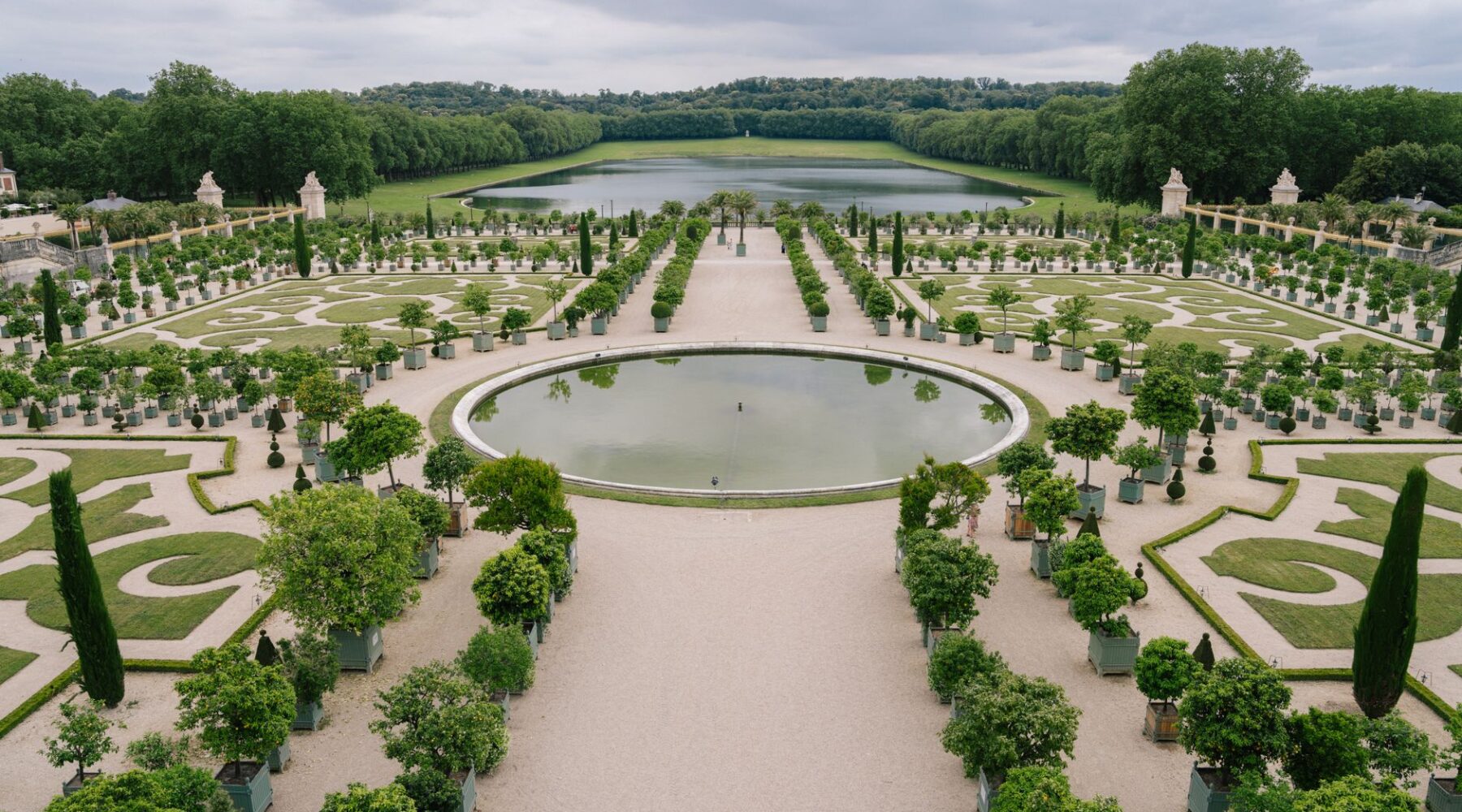
Four days is the first length at which Paris stops asking you to make painful choices. Three days is a very good trip that has to leave Versailles out; four days can have Versailles, or — and this is the version we would pick — a whole day with no monuments in it at all. The 4 days in paris itinerary below is built around that fork, with three fixed days that cover every headline sight and a fourth that you choose.
The subtitle matters more than it sounds. A four-day trip run at three-day pace is just a three-day trip with a tired day bolted on. Run properly, the fourth day is what turns a sightseeing holiday into a visit. Prices below were checked in September 2026; treat them as the right order of magnitude, because French state-museum tariffs moved sharply in January 2026 and will move again.
The four days at a glance
| Morning | Afternoon | Evening | |
|---|---|---|---|
| Day 1 Orientation |
Île de la Cité, Notre-Dame, Sainte-Chapelle | Latin Quarter, Panthéon, Luxembourg | Saint-Germain |
| Day 2 The great axis |
Louvre, 9am slot | Tuileries, Concorde, Arc de Triomphe | The Marais |
| Day 3 The hill and the tower |
Montmartre and Sacré-Cœur | Musée d’Orsay | Eiffel Tower at dusk, Seine cruise |
| Day 4 Your choice |
A: Versailles, the whole day · B: markets, canals and nothing scheduled | Something booked in advance | |
Days 1 to 3 are the standard first-timer sequence and we have written them out in full in the three-day itinerary. What follows here is the shorter version of those, then the fourth day in detail, because the fourth day is the reason you are reading this rather than that.
What four days costs
| Item | Price | Notes |
|---|---|---|
| Louvre | €22 EEA / €32 non-EEA | Timed slot; closed Tuesdays |
| Musée d’Orsay | ≈€16 | Closed Mondays |
| Sainte-Chapelle | ≈€13 | Open daily |
| Versailles Passport, full estate | €22–32 EEA / €25–35 non-EEA | Low and high season; closed Mondays; under 18 free |
| RER C to Versailles, return | ≈€8 | Zone 4 — a Paris day pass does not cover it |
| Eiffel Tower, stairs to level 2 | €14.80 | Shortest queue, same view as the lift |
| Eiffel Tower, lift to level 2 | €23.50 | The better viewing level |
| Seine sightseeing cruise | ≈€16–20 | About an hour |
| Paris Museum Pass, 4 days | €109 | Now worth checking — see below |
| Single Metro ticket | €2.55 | Carnet discount abolished January 2026 |
| Two-course lunch formule | €19–28 | The same food costs half again at dinner |
Reckon on €300 to €430 per person for four days excluding accommodation. This is also the first trip length where the Paris Museum Pass becomes a genuine question rather than an obvious no: the four-day pass at €109 covers the Louvre, the Orsay, Versailles, the Arc de Triomphe, Sainte-Chapelle and the Conciergerie, which on the Versailles version of this itinerary comes to roughly the same money for a non-EEA visitor and rather more than the pass costs if you add a couple of the smaller museums. It still does not include the Eiffel Tower. Do the arithmetic for your own list rather than taking anyone’s word for it.
Days 1 to 3, in brief
Day 1 — the island and the Left Bank
Start at Notre-Dame before nine, when the queue is five minutes rather than an hour. Walk the Île de la Cité west to Place Dauphine and the Square du Vert-Galant, then back east to Sainte-Chapelle, which takes fifteen minutes and is the most concentrated beauty in the city. Afternoon in the Latin Quarter: the Panthéon, Rue Mouffetard, the Jardin du Luxembourg. Evening in Saint-Germain, one street back from the boulevard where the prices halve.
Day 2 — the Louvre and the great axis
The Louvre on a 9am slot, three hours, two wings out of three. Then the Tuileries and one of the free green chairs by the octagonal basin, the Place de la Concorde, the Champs-Élysées — walked once for the scale, never eaten on — and the Arc de Triomphe, which is the better viewpoint of the two because from it you can see the Eiffel Tower. Evening in the Marais.
Day 3 — Montmartre, the Orsay and the tower
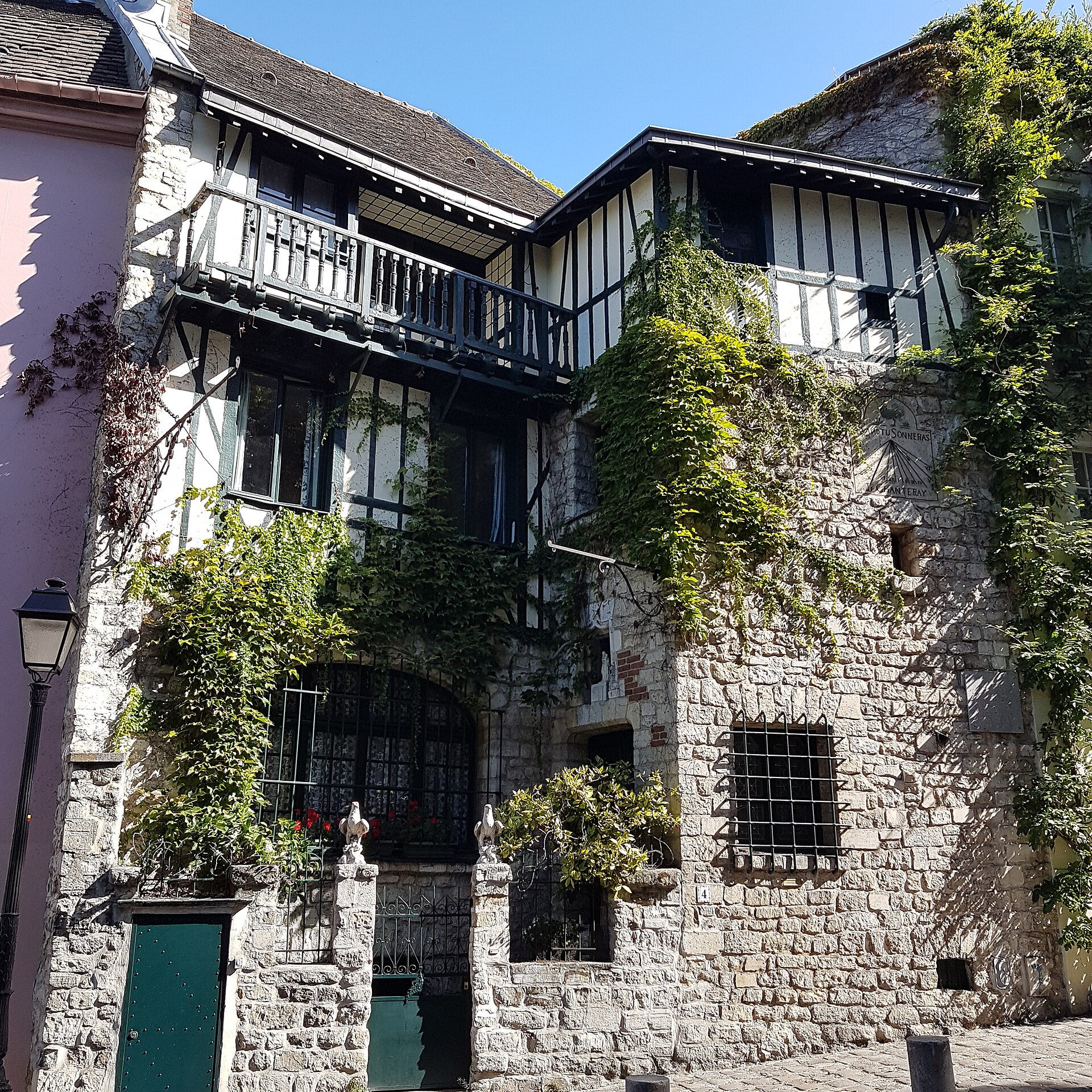
Metro to Abbesses, walk up rather than taking the funicular, ten free minutes inside Sacré-Cœur and twenty on the terrace outside it, then the streets north and west of the basilica — Rue de l’Abreuvoir, the vineyard, the windmills on Rue Lepic. Walk straight through Place du Tertre; the Montmartre worth seeing starts two streets away from it.
Afternoon at the Musée d’Orsay — fifth floor first, ninety minutes, work down through the sculpture. Then west along the river to the Eiffel Tower for a slot an hour before sunset, and a late Seine cruise to end the day sitting down.
Day 4, Option A — Versailles
If you are going to do Versailles, do it properly and give it the whole day. Half a day at Versailles is worse than no Versailles: you see the state apartments in a queue, miss the gardens entirely, and leave irritated.
Getting there
RER C from Saint-Michel, Musée d’Orsay or Champ de Mars to Versailles Château–Rive Gauche, roughly 35 to 60 minutes depending on where you board, then a ten-minute walk. Versailles is in zone 4, so a central Paris day pass does not cover it — buy a return ticket or make sure your pass includes all zones. The transport guide covers the alternatives, including the slower but often emptier trains from Saint-Lazare and Montparnasse.
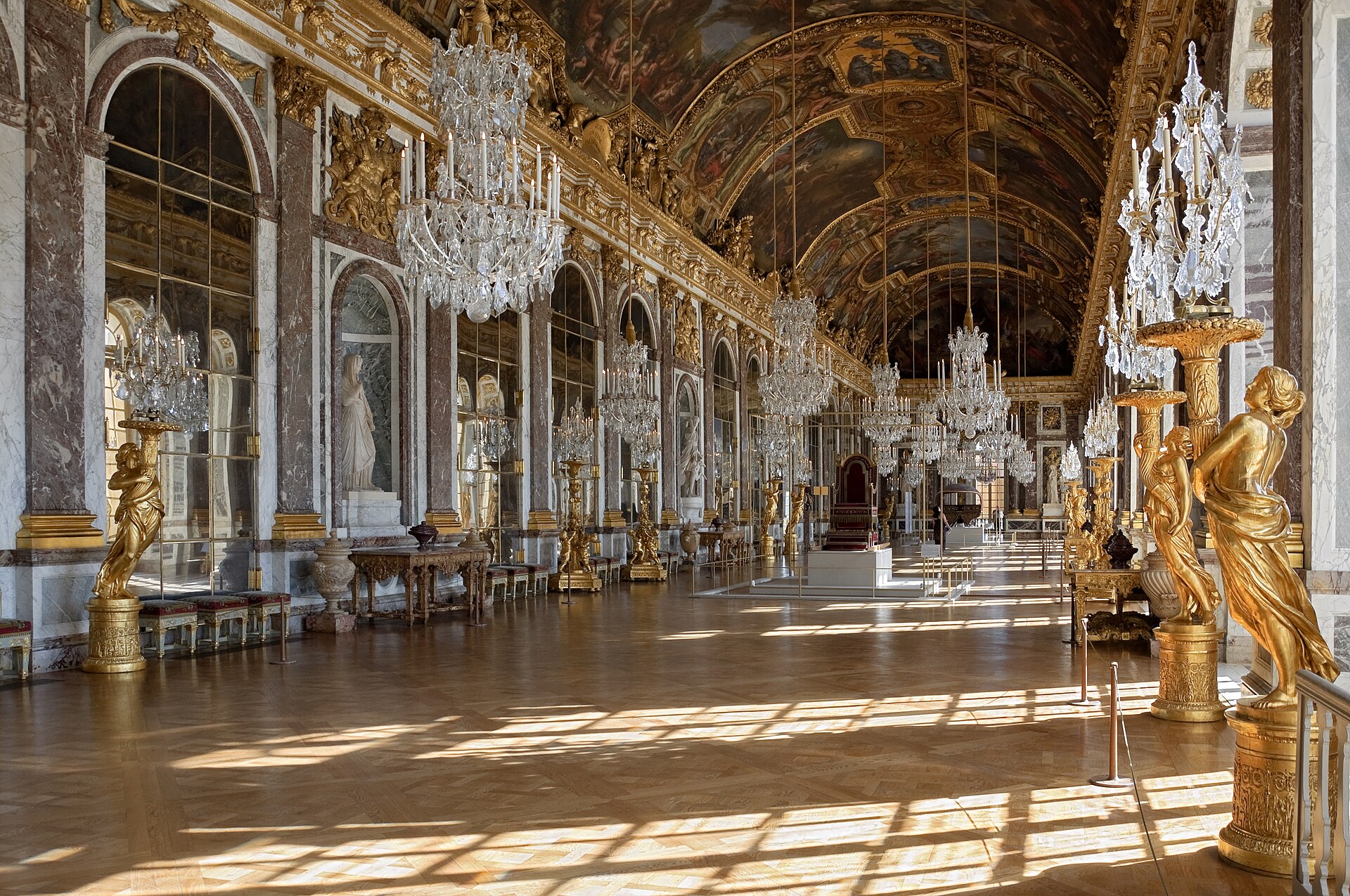
Get the first train you can stand. The difference between arriving at 8.45 and arriving at 10.30 is the difference between walking through the Hall of Mirrors and shuffling through it.
What to actually do there
- The château, first thing. The state apartments and the Hall of Mirrors, which is 73 metres of mirrored arcade built to be seen at sunset and which was where the treaty ending the First World War was signed. Two hours.
- The gardens. Free on most days, ticketed on fountain-show days when the water features run to music. They are enormous — the Grand Canal alone is 1.6 kilometres long — and a bike or the little train is a legitimate choice rather than a cop-out.
- The Trianon palaces and the Queen’s Hamlet. This is the half almost everybody skips and it is the better half. The Petit Trianon and Marie-Antoinette’s mock village of thatched cottages and working farm are quiet, human-scaled and far more interesting than another gilded room. They open in the afternoon.
Take lunch with you. The catering inside the estate is expensive and mediocre, and the gardens are full of places to sit. Our Versailles guide has the full route and the timings.
The honest verdict on Versailles
It is genuinely extraordinary and it is genuinely exhausting, and a lot of people come back having enjoyed the idea of it more than the day. If crowds ruin things for you, if you are travelling with small children, or if you have already done one enormous museum this trip, consider Fontainebleau instead — a palace of comparable grandeur, an hour south, with perhaps a tenth of the visitors and a forest attached.
Day 4, Option B — the day with nothing in it
Here is the case for the other choice. After three days of monuments, a fourth day of one more enormous palace produces diminishing returns. A day spent in the parts of Paris that are not on anyone’s list produces the memories people actually keep.
Morning: a real market
The Marché d’Aligre in the 12th is the one Parisians shop at rather than photograph: a covered hall, an open-air food market along the street, and a small permanent brocante on the square selling other people’s furniture. It runs Tuesday to Sunday mornings and it is at its best before ten. Buy lunch as you go.
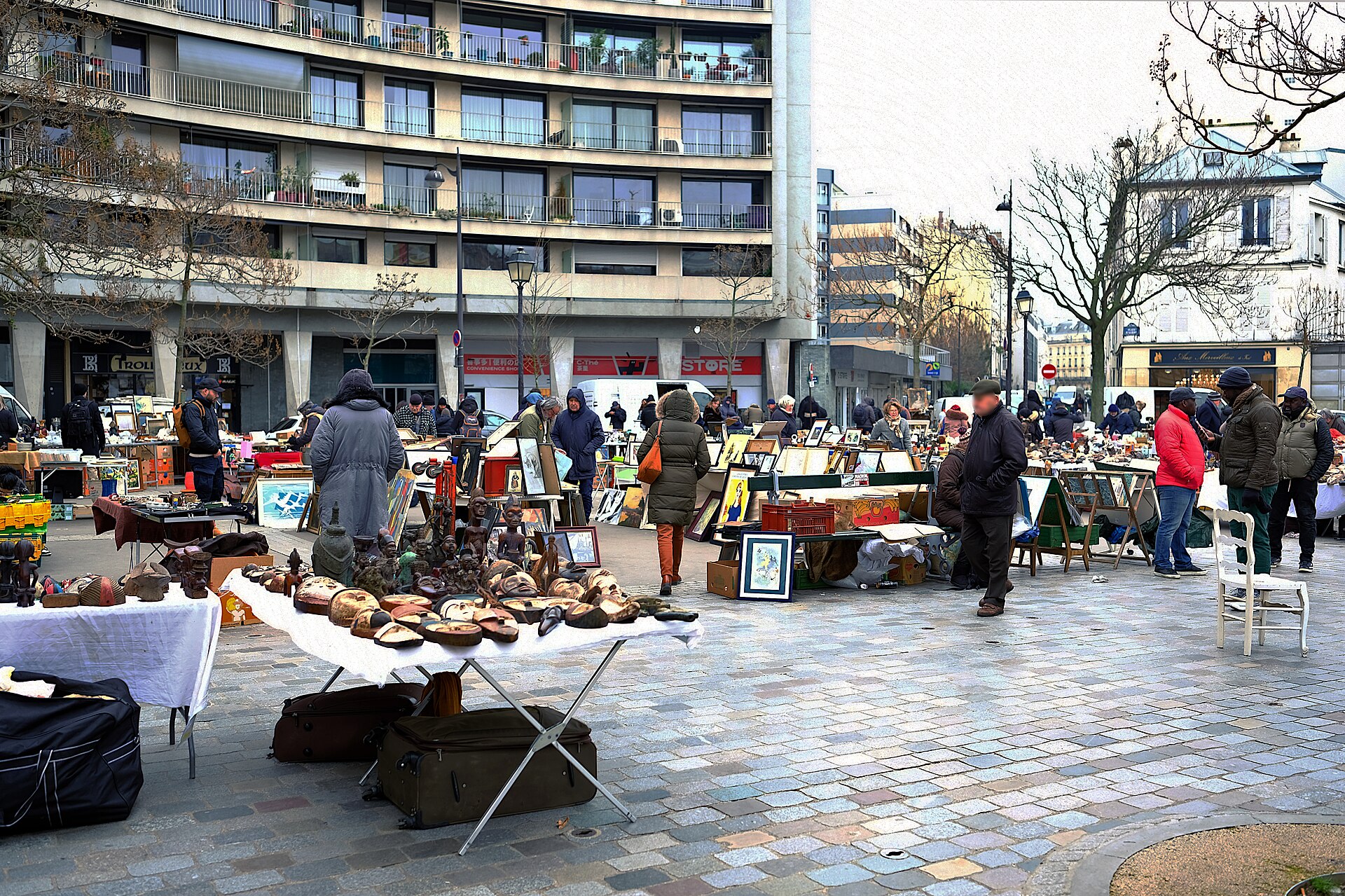
Our food markets guide covers the alternatives — the Marché Bastille on Thursday and Sunday is the largest, the Marché des Enfants Rouges in the Marais is the oldest and the most food-hall-like, and the flea markets guide handles Saint-Ouen, which is a half-day in itself.
Midday: the Coulée verte
From Aligre it is ten minutes to the eastern end of the Coulée verte René-Dumont, an elevated linear park built along a disused railway viaduct that runs nearly three miles from Bastille to the Bois de Vincennes. It predates New York’s High Line by fifteen years, it is planted with roses and bamboo and lime trees, and on a weekday morning you will share it with joggers and nobody else. Walk it west to Bastille, three metres above a city that has no idea you are there.
Afternoon: Canal Saint-Martin and the 10th
Cross to the canal, which is the other Paris — iron footbridges, a series of locks, plane trees, and the sort of shops and cafés that exist for the people who live around them. Sit on the quay with a coffee and watch a boat go through a lock, which takes about fifteen minutes and is oddly compelling. Then walk north into the 10th or east into Belleville and Oberkampf, which is where the city’s best cheap eating and most of its interesting bars have ended up.
Alternatively, if you want one thing with a roof on it, this is the day for the smaller museums: the Musée Marmottan Monet for the water lilies without the Orsay’s crowds, the Musée Jacquemart-André for a nineteenth-century collector’s house left as it was, the Musée de Cluny for medieval art in a Roman bath house, or Père Lachaise, which is not a museum but is a hillside village of the dead and takes two unhurried hours.
Evening: the meal you booked
The one thing that should be scheduled on this day is dinner. Book it two weeks out, somewhere you genuinely want to go rather than somewhere convenient, and treat it as the point of the day. Our restaurant guide has the shortlist, and the Michelin guide covers the top end, where lunch menus at starred restaurants are frequently half the price of dinner for the same kitchen.
Day 4, Option C — the food day
There is a third version, and for a certain kind of traveller it beats both of the above. Give the fourth day entirely to eating, and structure it the way a Parisian would rather than the way a restaurant guide would.
Start with a food tour in a neighbourhood you have not walked yet — the 11th, Batignolles in the 17th, or the streets around Rue des Martyrs in the 9th, which is as good a food street as exists in the city. Two to three hours, roughly €90 to €130, and the thing you are actually buying is a local walking you into the shops you would not have gone into. Cheese, charcuterie, bread, wine, pastry, and someone explaining why one baguette costs €1.20 and the one next to it costs €1.90.
Alternatively, take a cooking class. The croissant and macaron classes are the popular ones; the market-to-table classes, where you shop with the chef first and then cook what you bought, are considerably more useful and roughly the same money.
Then a long lunch, an afternoon of nothing in particular, and an evening that starts in a wine bar rather than a restaurant — a plate of charcuterie, a board of cheese, three glasses of things you would not have picked yourself. Cheaper than dinner, more Parisian than dinner, and it leaves you able to walk afterwards. Our food guide is the overview, and the cheap eats guide covers the version that costs a third as much.
How the four days shift by season
The same itinerary behaves quite differently across the year, and the fourth day is where the difference shows most.
Summer, June to August
Queues roughly double, a good number of the best small restaurants close for the annual holiday in August, and the city is genuinely hot with very little air conditioning. Start earlier — 8am rather than 9 — and put indoor time in the middle of the day rather than at the end. Versailles in July is the version of Versailles people complain about; consider Option B or C instead, or swap in Fontainebleau. The upside is the light: it is still bright at ten in the evening, which effectively adds two hours to every day. See summer in Paris.
Autumn, September to November
The best two weeks of the year in Paris are the last of September and the first of October: the light is low and gold, the crowds have thinned sharply since August, everything has reopened, and the weather is usually still good enough to eat outside. All four days work exactly as written. Autumn in Paris has the detail.
Winter, December to February
Daylight runs roughly 8.30am to 5pm, which removes about a third of every day. Rebuild around two indoor anchors rather than long walks, move the Eiffel Tower to a mid-afternoon slot so you still get daylight, and give the fourth day to the covered passages, the department store windows and a very long lunch. February is the cheapest month to fly and stay. See winter in Paris and, if your trip falls in December, Christmas in Paris.
Spring, March to May
The gardens do most of the work, which shifts the balance of the itinerary outdoors. The Luxembourg, the Tuileries, the Versailles gardens and the Coulée verte are all at their best, and Option B becomes noticeably more attractive. Expect rain; expect it not to matter much. Spring in Paris covers it.
Which option should you take?
| Take Versailles if… | Take the free day if… |
|---|---|
| It is a once-in-a-lifetime trip to France | You will be back |
| You are interested in the history rather than the photograph | You are more interested in how the city works than how it was ruled |
| You are travelling in shoulder season, when it is bearable | You are here in July or August, when it is not |
| Your group includes teenagers who need a headline sight | Your group includes small children or anyone footsore |
| You have already had one unstructured afternoon | Days 1 to 3 have been relentless |
For what it is worth: on a four-day first visit we would take Versailles, and on a four-day second visit we would take the free day without hesitating.
Where to stay for four days
Four days is long enough that neighbourhood character starts to matter as much as raw centrality, but not so long that you can afford a thirty-minute commute each way.
- The safe answer: the Marais (3rd and 4th) or Saint-Germain (6th). Walkable to almost everything here, and full of places to eat late.
- The good-value answer: the 9th around South Pigalle, the 11th around Oberkampf, or the 10th along the canal. Fifteen to twenty minutes out, meaningfully cheaper, and neighbourhoods in their own right — which on Option B above is an advantage, because your fourth day starts on your doorstep.
- With family: prioritise a lift in the building and a park within five minutes. The family accommodation guide is specific about which streets work.
Our where to stay guide and the arrondissement comparison go through it in detail, and on a four-night stay an apartment rather than a hotel starts to make real financial sense once breakfast and laundry are in the calculation.
Getting the practicalities right
Four days is long enough that a few decisions made in the first hour save you real time later.
Transport: buy the right thing
On this itinerary you will walk most of the city and take two or three Metro journeys a day, which at €2.55 each comes to less than the €12.30 Navigo Jour day pass. The exception is the Versailles day, where you need a zone 4 ticket that the central day pass does not cover. If your four days happen to fall Monday to Thursday, a Navigo Découverte weekly at €32.40 plus the €5 card fee covers all zones including both airports and Versailles, and will almost certainly beat buying tickets one at a time — but it runs Monday to Sunday only, so a Thursday-to-Sunday trip gets no benefit from it. Our tickets and passes guide works through the combinations, and the Metro guide covers the practicalities of actually using it.
Booking: three things, in this order
The Eiffel Tower first, roughly sixty days out if you want a specific evening slot. The Louvre second, two to three weeks out for a 9am entry. Versailles third, one to two weeks out for a timed château entry. Then one restaurant. That is the whole booking list; everything else on these four days you can turn up for, and the third-party sellers charging a premium for “skip the line” entry to things without a line are selling you nothing.
Arrival and departure
From Charles de Gaulle, the RER B reaches Gare du Nord, Châtelet and Saint-Michel in about 35 minutes on the €14 airport flat fare. From Orly, Orlyval plus the RER B, or the Orlybus, run on the same fare. Taxis from both airports charge a fixed published fare into each half of the city rather than running a meter, which makes them competitive for two or more people with luggage and means you cannot be overcharged. See the airport transfer guide and the taxi and Uber guide. Do not schedule anything for the first two hours after you land, and leave more slack than feels necessary on the way out.
What to carry
A water bottle — Paris has around 1,200 public drinking fountains and the tap water is good. A layer, because the mornings are colder than the forecast suggests and museums are air-conditioned. A card rather than cash; almost everywhere takes contactless, and the few places that do not will tell you. And shoes you have already worn in, which is the single most repeated piece of advice on this site for a reason. The packing list has the rest, and the travel apps guide covers the two or three that are genuinely worth installing.
What still does not fit in four days
- Two day trips. Versailles plus Giverny is a four-day trip with two days of trains in it. Pick one.
- Both Versailles and a genuinely slow day. That is a five-day trip, and it is the reason five is the sweet spot.
- Disneyland alongside central Paris in four days. Possible, but it means giving up either the Louvre day or the Montmartre day entirely. See the Disneyland guide for how families usually structure it.
- The Eiffel Tower summit. Still no. The second floor is the better view and the shorter queue.
- Mont-Saint-Michel. Four to five hours each way. It is a wonderful place and a terrible day trip; see our guide for why it works only as an overnight.
Frequently asked questions
Is 4 days in Paris enough?
Yes — four days covers every headline sight, two major museums, three or four neighbourhoods and either Versailles or a proper day off, without ever feeling like a route march. It is the most common length of Paris trip for good reason. Five days adds slack rather than sights; three days means giving up the fourth day entirely.
Can you do Versailles and the Louvre in four days?
Comfortably, provided they are on different days and neither is squeezed. Versailles is a whole day; the Louvre is a morning. Putting a big museum and a day trip on consecutive days is fine; putting them on the same day is not.
Is the Paris Museum Pass worth it for four days?
This is the first trip length where it might be. The four-day pass at €109 covers the Louvre, the Orsay, Versailles, the Arc de Triomphe, Sainte-Chapelle and the Conciergerie, which on the Versailles version of this itinerary is roughly break-even for an EEA visitor and a clear saving for a non-EEA one, given the higher Louvre and Versailles tariffs. It does not include the Eiffel Tower. Our pass analysis and the city pass comparison run the numbers properly.
How much walking is a four-day Paris itinerary?
Around 9 to 12 kilometres a day in the city, and 12 to 15 at Versailles, where the estate is far larger than it looks on the map. That is 15,000 to 22,000 steps a day. Broken-in shoes; see the packing list.
What is the best day of the week for Versailles?
Tuesday to Friday. It closes on Mondays, and weekends are considerably busier. If your four days include a Tuesday, that is also the day the Louvre is closed, which makes Tuesday the natural Versailles day.
Should I book a guided tour of Versailles?
Not necessarily. The audio guide is included and perfectly good, and the crowds are the problem rather than the interpretation. What a tour does buy you is a faster entry and someone else doing the logistics, which on a busy summer day has real value. See the tours guide for which operators are worth it.
Can I add a day trip other than Versailles?
Yes, and several are shorter and easier. Giverny is about five hours door to door and glorious from April to October. Auvers-sur-Oise can be done in an afternoon. Reims is 45 minutes by TGV. The day trips guide ranks them by what they cost you in time.
Is four days enough with kids?
Four days is a good length with children because the fourth day absorbs everything that went slower than planned. Halve the museum time, add parks, use the Batobus instead of the Metro, and consider swapping Versailles for a shorter, greener day. See Paris with kids and the family itinerary.
The fifth day is the one that changes the character of the trip rather than its coverage. Our 5 days in Paris itinerary keeps everything above and adds the slack that makes it enjoyable — with four different ways to spend that last day.
Related Paris Guides
- The complete Paris itinerary guide — plans for one to ten days
- 3 days in Paris — the first three days above, in full
- 2 days in Paris — the 48-hour version
- The Versailles guide — route, timings and the half everyone skips
- Day trips from Paris — ranked by time cost
- How many days do you need in Paris?
- Where to stay in Paris — neighbourhood by neighbourhood
- The Paris food markets guide — for the fourth-day morning
Photo Credits
Hall of Mirrors, Versailles: Chateau Versailles Galerie des Glaces by Myrabella, CC BY-SA 3.0, via Wikimedia Commons.
Place d’Aligre: CF1625 Paris 12e marche Aligre brocante rwk by Mbzt, CC BY 4.0, via Wikimedia Commons.
Rue de l’Abreuvoir, Montmartre: 4 Rue de l’Abreuvoir, Paris 19 September 2019 by Ricardalovesmonuments, CC BY-SA 4.0, via Wikimedia Commons.